


December 28, 2024 · 6 min read · Materials
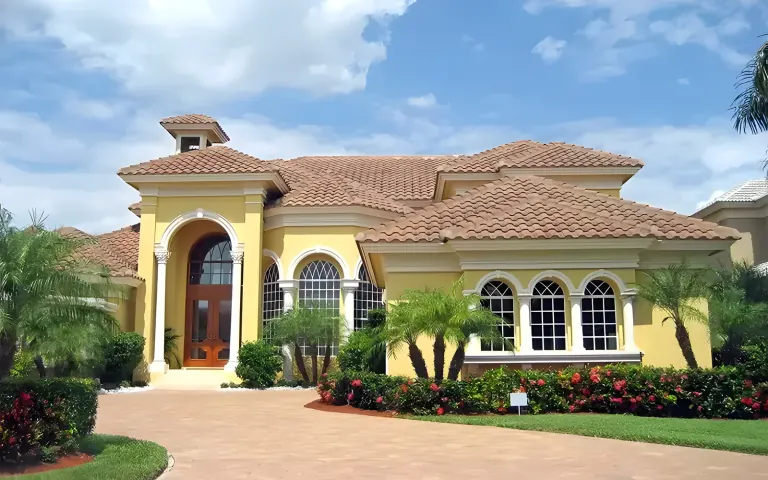
What homeowners get wrong about tile roofs
Tile has been part of Palm Beach County's look since Addison Mizner's Mediterranean Revival houses on the island. It is still one of the most common roofs we work on, and still one of the most misunderstood. Below are the myths we hear most, and what is actually true for a Palm Beach County home.
Molsbee Roofing has installed, repaired and re-roofed tile across the county since 1975.
Myth one: tile is too heavy for most homes
What people worry about. Tile weighs far more than shingles or metal, and owners wonder whether the house can carry it.
What is true. Many homes in the county were framed with tile in mind. In the tile neighborhoods west of State Road 7, concrete tile over wood trusses is the norm. Weight matters on houses that were built for a lighter roof, on older framing, and on additions that were never designed for tile. Those houses need a structural check before tile goes on.
What we do. During the free roof inspection, we look at the framing we can reach from the attic and tell you whether tile is realistic, or whether a lighter system makes more sense.
Myth two: tile roofs blow off in hurricanes
What people worry about. After a storm, photos of broken tile on lawns make tile look fragile.
What is true. Much of that damage comes from older roofs set by methods that are no longer used. Today tile is set with approved adhesive or mechanical fasteners, piece by piece, to the Florida Building Code, 8th Edition, and the fastening tightens with the design wind band, from 150 mph inland to 170 mph on the barrier islands. A tile can still crack or loosen in a hard storm, but it can be replaced on its own.
The part most people miss. The tile is the shield; the underlayment beneath it is the waterproofing. Because the tile roofs we build carry a secondary water barrier on the deck, a well-built tile roof keeps water out even when some tile is damaged.
Myth three: tile roofs need constant upkeep
What people worry about. That tile means endless repairs.
What is true. A sound tile roof asks for periodic checks: cracked or slipped tile, debris in valleys, flashing at walls and penetrations. The real long-term item is the underlayment. It ages faster than the tile, especially under attic heat, so the tile above can outlast the waterproofing beneath it.
What that means for you. When underlayment wears out under clay barrel tile that is still sound, you may not need new tile. We can detach and reset: lift the tile, replace the underlayment and reset the same tile.
Bonus myth: if the tile looks fine, the roof is fine
This is the one that costs owners the most. In Jupiter, where the median home dates to 1989, we often find original tile and original underlayment reaching the end of their life together in places like Admirals Cove and Jonathan's Landing. From the street, the roof looks good. Under the tile, the underlayment has gone brittle.
An inspection can show cracked tile, slipped pieces, flashing wear and leak signs in the attic. What it cannot show without lifting tile is the condition of the underlayment everywhere under the field. Where it is safe, we lift sample tile, photograph what we find and tell you what we could and could not see.
Can you walk on a tile roof?
Not casually. Tile cracks under the wrong footstep. Our crews wear protective, safe footwear on tile roofs and move across them carefully. If you need something checked on your roof, let us do the walking.
Are all tile roofs the same?
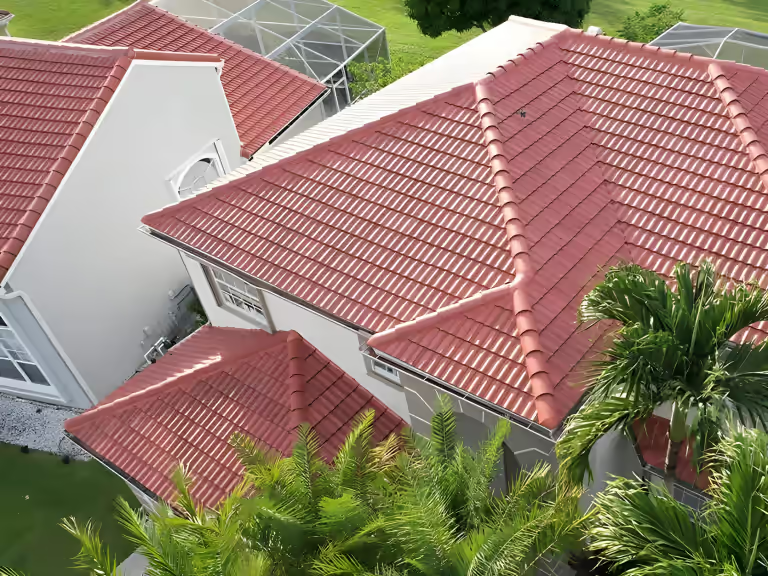
No. Concrete tile is the common choice in newer neighborhoods. Clay holds its color and suits historic districts, where matching profile and color is often required: the Town of Palm Beach Architectural Commission looks closely at roof tile profile, and Boca Raton's Old Floresta guideline prefers straight barrel mission tile in terracotta. Profile matters too, from barrel to flat.
How do we check a tile roof?
- A free roof inspection of the tile, flashing, valleys and attic.
- Photos of the findings, including any sample tile we lift.
- A written scope with the price before any work starts, whether that is a repair, a detach-and-reset or new tile.
See our tile roofing page for more on the systems we install.
About Molsbee Roofing
We have roofed Palm Beach County since 1975 under Florida certified roofing contractor license CCC1327429. Tile work carries our lifetime workmanship warranty plus the manufacturers' product warranties. Molsbee is a GAF Certified Contractor and an Owens Corning Preferred Contractor, and we provide a roof certification letter for your insurer after a repair or re-roof when you ask for one.
Get the facts about your own roof
Call (561) 318-8624 or request a free roof inspection. We will tell you, with photos, what your tile and the underlayment beneath it actually look like.