


November 19, 2024 · 6 min read · Materials
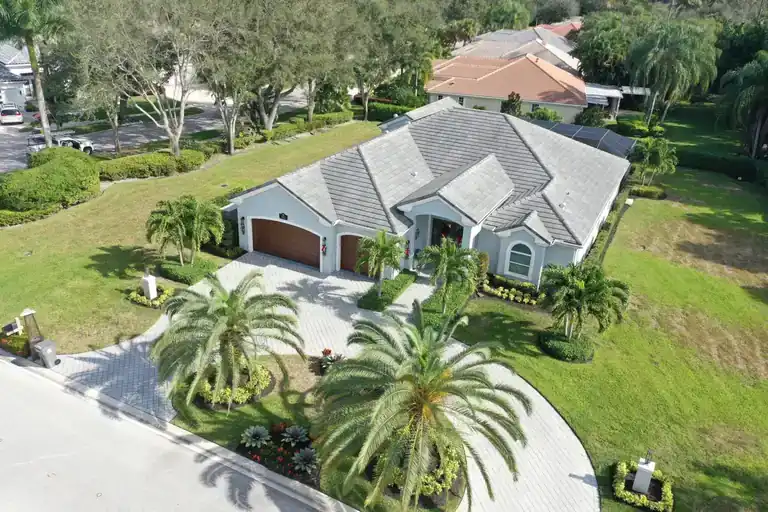
What "value" means for a metal roof in Palm Beach County
Value on a roof is not a sticker on the listing. It is a roof that holds through hurricane season, keeps the attic under it more comfortable, lasts decades with sensible care, and comes with paperwork a buyer or your insurer can read. Metal does well on all of those counts when it is specified and installed for the county's conditions. Here are the five ways it adds value, and the questions to ask so it actually does.
Molsbee Roofing has installed and repaired roofs across Palm Beach County since 1975. For the material itself, see our metal roofing page.
Value 1: It is built for the county's wind
Every roof here is built to the Florida Building Code, 8th Edition, and the whole county sits in the wind-borne debris region. Design wind speeds run from 150 mph inland to 160 mph across most of the mainland and 170 mph on the barrier islands and some waterfront strips, such as the Flagler Drive waterfront in West Palm Beach and the lagoon front in Lake Worth Beach.
A metal roof earns its value through attachment. Each panel system carries a product approval that sets the clip spacing, fastener type and deck requirements for a given wind speed, and the permit office checks the installation against it. When we quote metal, the fastening schedule for your parcel's wind band is written into the scope.
What to ask: which product approval is being installed, and what wind speed does it cover?
Value 2: It reflects sun instead of storing it
Metal panels with a reflective factory finish send much of the sun's energy back off the roof rather than soaking it into the deck. Lighter finishes reflect more than darker ones. In practice that means a less punishing attic in summer, which is also kinder to what sits beneath the panels, because attic heat ages underlayment faster than the covering above it.
We do not promise a figure on your power bill; that depends on the house, the attic, the insulation and how you run the air conditioning. The honest claim is simpler: a reflective metal roof keeps more heat out of the attic than a dark, absorbent one.
What to ask: which finish and color are being quoted, and is the finish rated for coastal exposure?
Value 3: It lasts, when the details are right
A well-installed metal roof serves for decades. The weak points are rarely the panels themselves. They are the fasteners, the flashing, the underlayment and the places where different metals meet.
- Panel metal. Aluminum resists salt far better than coated steel, which matters near the Intracoastal and the ocean. Near salt water that choice matters. Panel gauge and the finish system are named in the scope.
- Attachment. Standing seam hides its attachment: clips fastened to the deck hold the panel at the seam, and the clip type lets long panels move as they heat and cool without working the fasteners loose. Exposed-fastener systems use screws through the panel face, with washers that need an eye kept on them over the years. Neither is wrong; we explain the future inspection points for whichever you choose.
- Underlayment. Metal runs hot, so the layer under it should be a high-temperature self-adhered underlayment rated for metal roofing. On a re-roof it can also serve as, or sit over, the secondary water barrier, depending on the method the scope names.
- Flashing and trim. Ridge, hip, valley, eave and wall flashing in a metal compatible with the panels, so the joint does not corrode.
Fewer re-roofs over the years you own the house is where much of metal's value sits, and that depends on these details being done properly the first time.
What to ask: what metal and gauge are the panels, what underlayment goes beneath them, and what metal are the fasteners and flashing?
How is a metal re-roof installed and inspected?
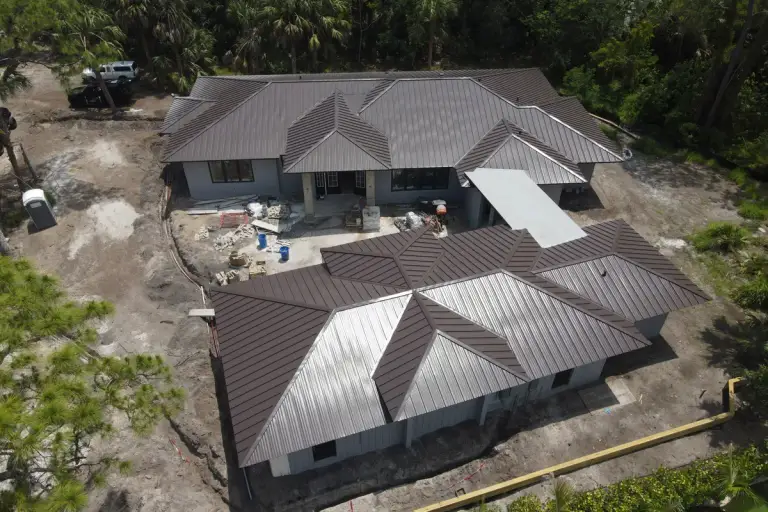
A re-roof to metal normally starts by removing the old covering down to the deck. That is when the deck can finally be seen: soft or delaminated sheathing is photographed and priced as its own line before it is covered, and loose sheathing is re-nailed to the current schedule. The secondary water barrier goes on next, then the underlayment, flashing and panels.
The town inspects along the way, usually at sheathing, at roof metal or tin tag, and at final, and some add an in-progress visit. Palm Beach County, which permits unincorporated areas such as Jupiter Farms and The Acreage, signs off the in-progress stage on metal roofs. Between inspections the roof stays dried in. During tear-off the scope spells out where the dumpster sits, how landscaping, pool areas and walkways are protected, and how the site is cleaned of nails and scrap.
Value 4: It comes with paperwork a buyer can trust
When you sell, or when your carrier reviews your policy, the roof's paper trail matters as much as its look. A metal re-roof done properly leaves:
- A closed permit with a passed final inspection, on record with your town.
- The product approval for the installed system.
- Our lifetime workmanship warranty and the manufacturer's product warranty, in writing.
- When your insurer asks for one, a roof certification letter for your insurer.
A buyer's inspector can check every one of those. A roof with no permit history raises questions a metal roof with clean records does not.
What to ask: what documents will you hand over at the end of the job?
Value 5: It suits the house, if the neighborhood allows it
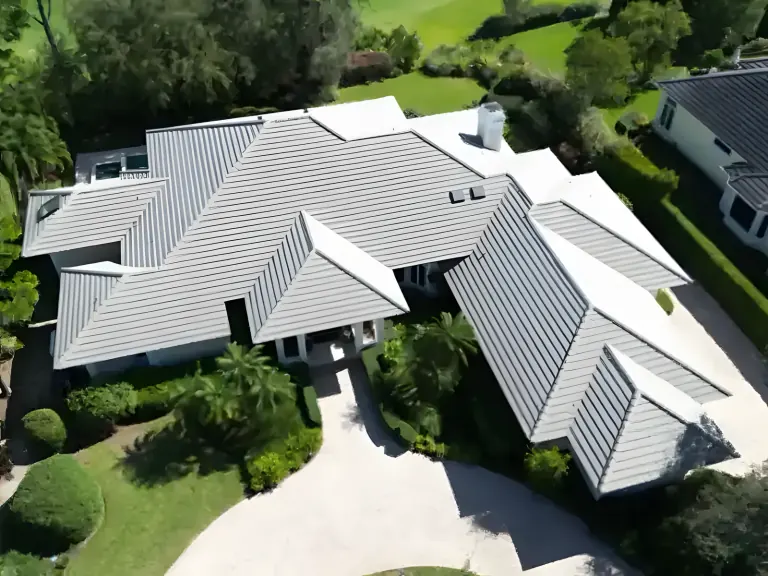
Standing seam in white, silver or a muted color reads clean and modern on a newer home and can look right on a coastal cottage. But appearance only adds value if it is allowed.
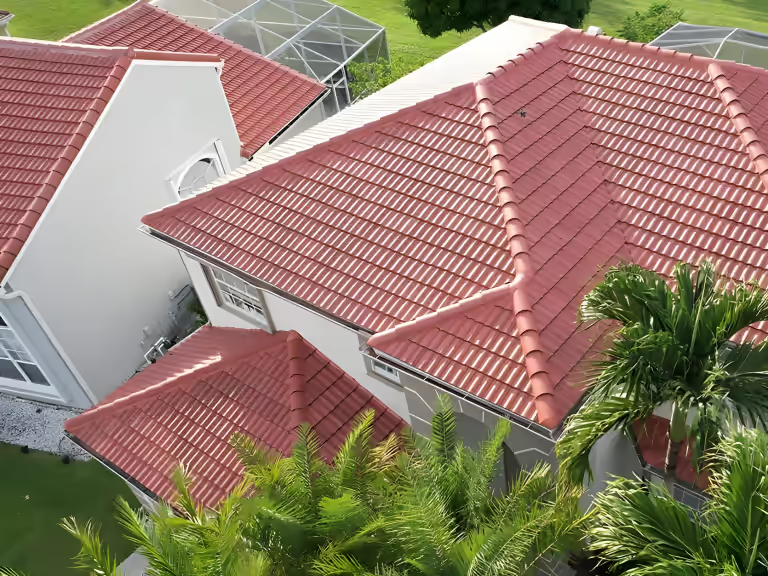
Some districts limit metal. In Boca Raton's Old Floresta, the historic guideline prefers straight barrel mission tile in terracotta and lists standing seam and metal shingle as not preferred. In Lake Worth Beach, the Historic Resources Preservation Board has refused standing seam over an original metal-shingle roof on North Ocean Breeze: the replacement had to replicate the original look. In Delray Beach's historic districts, the Historic Preservation Board reviews exterior changes first. Community associations, such as the Architectural Review Committee inside PGA National, also approve a re-roof before the permit.
What to ask: does your street need design approval for a change to metal, and who prepares the application?
How we price a metal roof
Every metal project starts with a free roof inspection. We check the existing covering, the flashing, the roof-to-wall joints and, where the attic is accessible, the underside of the deck. We tell you plainly what cannot be seen until the old roof comes off: the full condition of the deck and anything hidden under the current underlayment. You receive photos of the findings, then a written scope with the price before any work starts: the panel system, gauge and finish, the underlayment and the secondary water barrier we specify, the fastening for your wind band, the permit and how any concealed deck damage is handled. Financing is available on approved credit through our financing page.
Who installs it
The value in a metal roof is only as good as the crew that fastens it. Molsbee has installed roofs in Palm Beach County since 1975, from an office in Lake Worth Beach, under Florida certified roofing contractor license CCC1327429. Being a GAF Certified Contractor and an Owens Corning Preferred Contractor means the underlayment and accessory products we install carry the manufacturers' product warranties, the panel maker's product warranty covers the metal, and our lifetime workmanship warranty covers the installation itself.
See whether metal fits your house
Call (561) 318-8624 or request a free roof inspection. We will tell you whether metal is the right fit for your roof, your wind band and your street, and put the answer in writing.