


November 7, 2024 · 9 min read · Materials
Start with what the house allows, then choose
Most material guides start with a list of pros and cons. In Palm Beach County it works better the other way around: first find out what your house, your wind band and your street allow, then choose among what is left. This guide walks through that order and then compares the materials we install every week.
Molsbee Roofing has roofed Palm Beach County homes since 1975, and we install tile, metal, shingle and flat roofing systems.
Step 1: What does the roof's shape allow?
Slope decides the first cut. Tile and shingle are steep-slope materials; they shed water because the roof pitches. Metal is used mostly on pitched roofs, and certain standing-seam systems are rated for low slopes. Low-slope sections, such as flat roofs over porches, additions and many commercial buildings, usually take a membrane or other flat roofing system, or a standing-seam system rated for that slope. Many homes have both, and each section gets the system that suits its slope. See our flat roofing page for low-slope options.
Step 2: Can the structure carry it?
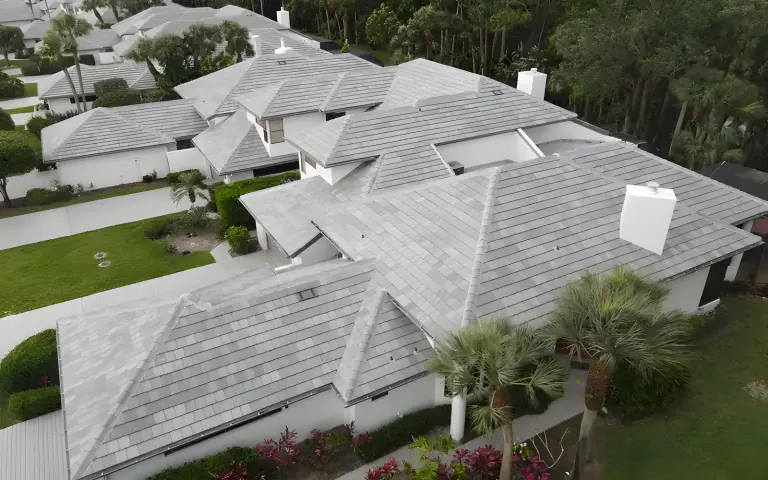
Tile is heavy. A house built for tile carries it well, and much of Wellington west of State Road 7 is concrete tile over wood trusses. Switching a lighter roof to tile is a structural question, not only a design one, and the framing is checked before it goes in the scope. Metal and shingle are much lighter, which gives more freedom on houses not built for tile.
Step 3: What does your wind band require?
Every roof in the county is built to the Florida Building Code, 8th Edition, inside the wind-borne debris region. Design wind speeds run from 150 mph inland to 160 mph on most of the mainland and 170 mph on the barrier islands. Each material can be installed to meet those speeds through its product approval, which sets the fastening, the underlayment and the deck requirements. The wind band changes how the roof is attached more than which material you may use. We check the parcel, not the ZIP code, because some cities straddle two bands.
Step 4: Who else has a say?
Associations and historic boards narrow the choice on many streets.
- In Boca Raton's Old Floresta, the guideline prefers straight barrel mission tile in terracotta and lists asphalt shingle, metal shingle, standing seam and wood shakes as not preferred.
- In Lake Worth Beach's historic districts, the replacement must look like the original: metal shingle stays metal shingle, and tile roofs keep their profiles.
- In West Palm Beach's historic districts, the city favors in-kind replacement.
- In Abacoa in Jupiter, roofs are tile, metal or shingle depending on the neighborhood, and matching the existing material keeps the street consistent.
- Inside PGA National, the Architectural Review Committee approves the re-roof first.
Step 5: How close are you to salt water?
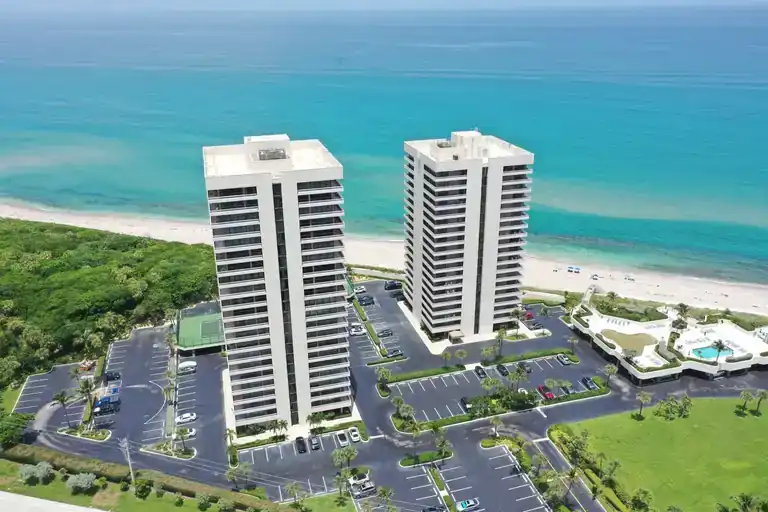
Near the ocean, the Intracoastal and Lake Worth Lagoon, salt reaches edges, flashing and fasteners first. That does not rule out any material, but it changes the specification: fastener metal, flashing compatibility and coastal-rated finishes all matter more on the water than a few miles inland.
Comparing the materials
Concrete and clay tile
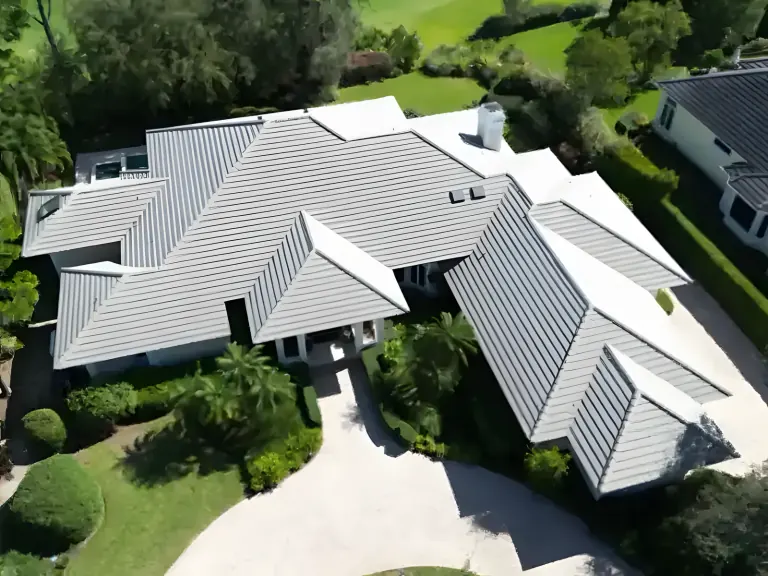
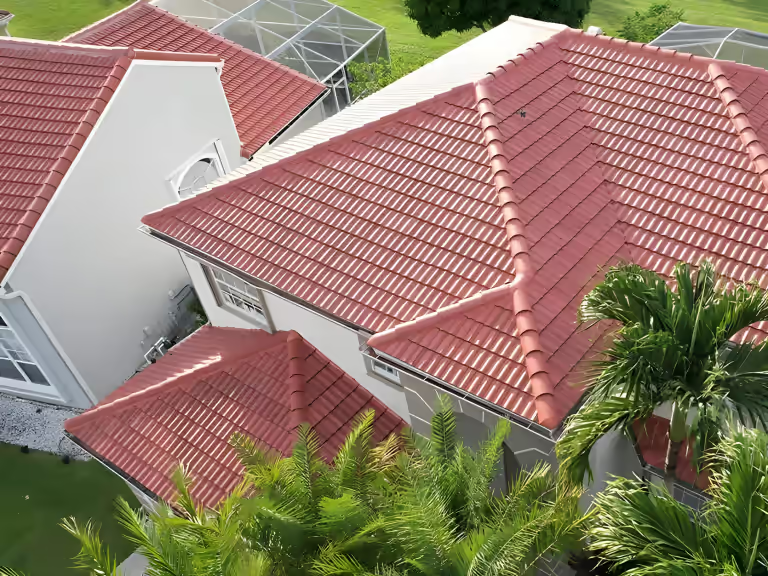
The look of Mediterranean Revival Palm Beach County. Tile itself is durable; on a tile roof the underlayment is the real waterproofing, and the tile is its shield. That is why a sound clay barrel tile roof can sometimes be detached and reset: we lift the tile, replace the underlayment and reset the same tile, keeping the original look. Our crews wear protective, safe footwear on tile roofs. More on our tile roofing page.
Metal
Standing seam hides its fasteners under the seam; exposed-fastener panels screw through the face. Metal is light, sheds water quickly, and reflective finishes keep more heat out of the attic. On the coast, the fastener and flashing metals must be compatible. More on our metal roofing page.
Shingle
Architectural shingle suits many ranch and contemporary homes and is much lighter than tile. It installs to the county's wind requirements with the right fastening pattern and underlayment, and the color range is broad. More on our shingle roofing page.
Flat roofing and TPO
For low-slope sections, the membrane and its seams, edges and drainage decide performance. The system is chosen for the building and the slope.
Which material lasts longest?
Tile, metal and quality shingle systems can all serve for decades in this climate when they are installed well. The difference in real life comes more from the underlayment, the flashing and the fastening than from the name of the material. That is why our proposals name each of those layers, not just the top one.
How we help you decide
A material recommendation should come from your roof, not a brochure. We start with a free roof inspection: slope, structure where it is visible, the existing covering, flashing and attic. We tell you what cannot be judged until the old roof comes off, such as the deck under intact tile. You receive photos of the findings and a written scope with the price before any work starts, and when more than one material fits, we can price them side by side so you compare like for like. If repairs are piling up, remember the quarter-roof rule. Florida's quarter-roof rule: when more than a quarter of a roof system or section is repaired, replaced or recovered in any 12-month period, the roof covering across that entire system or section must be replaced or recovered to meet current code requirements. An exception applies if that system or section was built, repaired or replaced in compliance with the 2007 Florida Building Code or a later edition: only the portion being repaired, replaced or recovered must meet applicable current code requirements. Our inspection helps determine which applies to your roof.
Why Molsbee
Our license is CCC1327429, and our history in the county goes back to 1975. We are a GAF Certified Contractor and an Owens Corning Preferred Contractor, so the materials we install are backed by the manufacturers' product warranties, and our lifetime workmanship warranty covers the installation. After the job, if your insurer asks for one, we provide a roof certification letter for your insurer.
Get a recommendation for your roof
Call (561) 318-8624 or request a free roof inspection. We will tell you which materials your house, wind band and street allow, and which one we would put on it.