




January 1, 2025 · 8 min read · Commercial
What a building owner should know about TPO
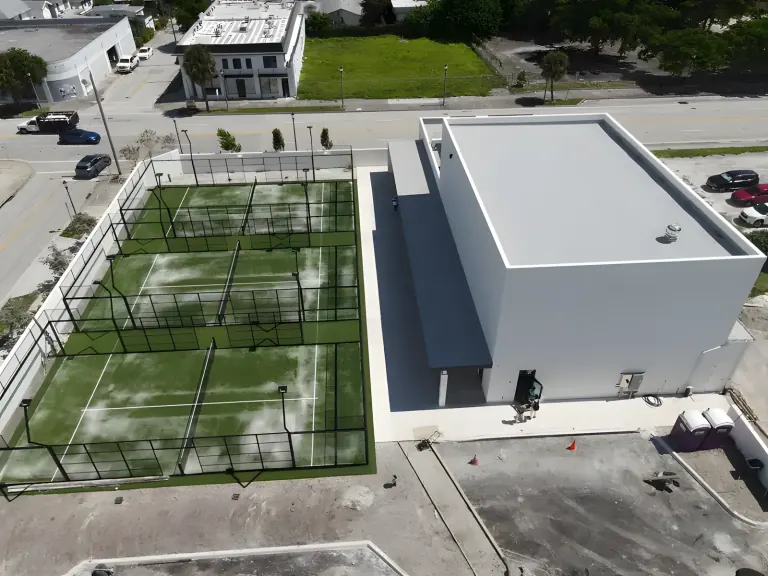
If you own or manage a building with a flat or low-slope roof in Palm Beach County, TPO is likely on the list. It is one of the most common single-ply membranes on commercial roofs here, from Glades Road offices in Boca Raton to the warehouses along the Port of Palm Beach. It is not the right fit for every building, and how it is installed matters more than the name on the roll.
Molsbee Roofing is Carlisle-certified for TPO and has worked on Palm Beach County roofs since 1975. This is how we explain the system to owners and property managers.
What is TPO?
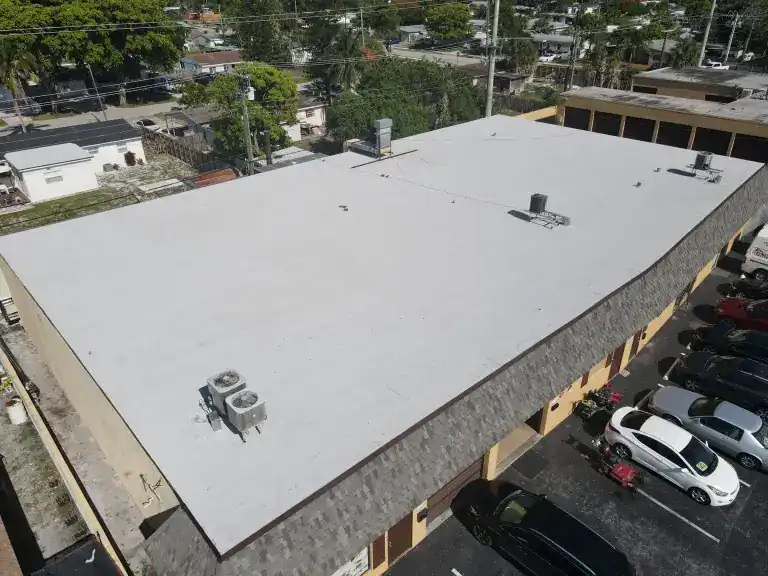
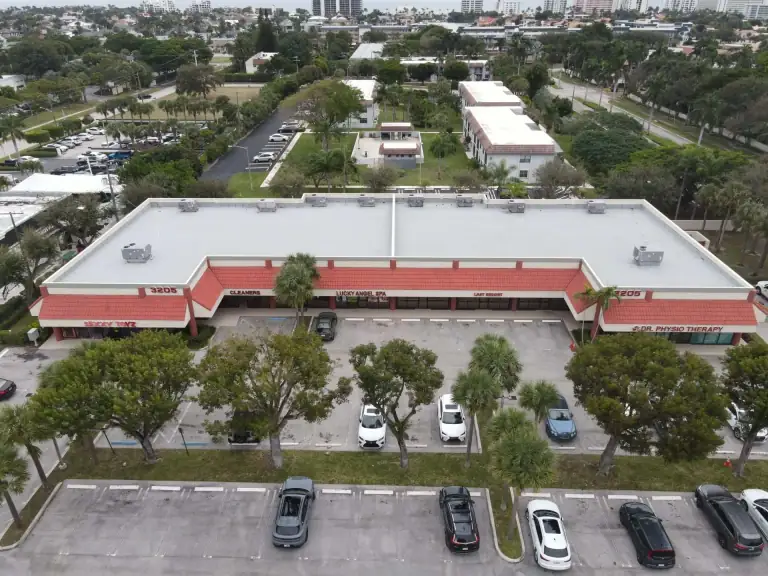
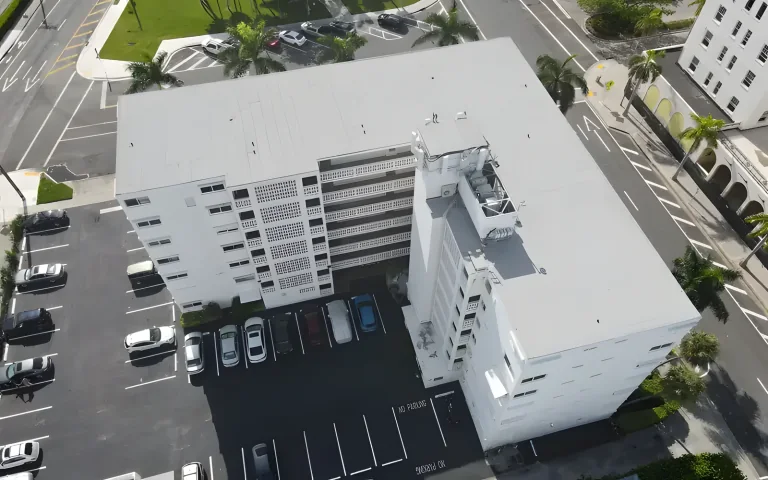
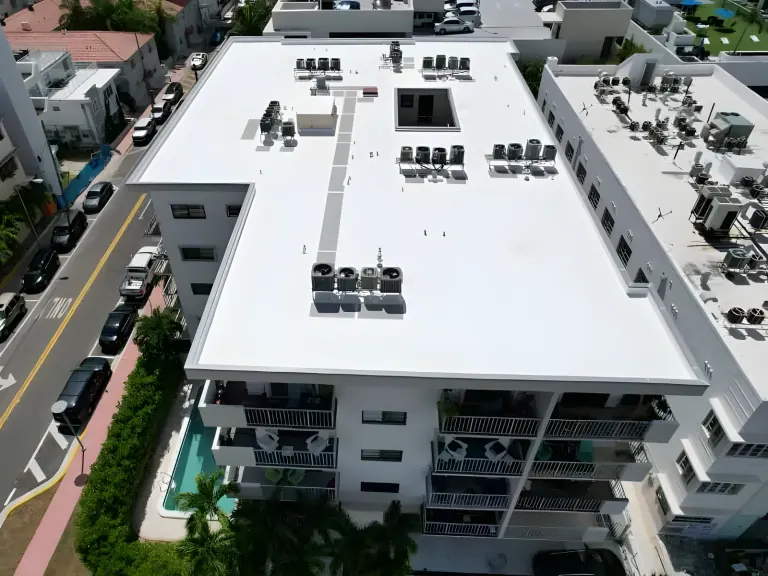
TPO (thermoplastic polyolefin) is a single-ply membrane made in wide sheets, usually white or light gray. The sheets go over insulation and a cover board, are fastened or adhered to the deck, and are joined at the seams with hot air, which melts the edges of two sheets into one continuous layer. Membrane thickness is measured in mils, and the thickness is named in the scope so bids can be compared.
Why do building owners choose it?
- Welded seams. A properly welded seam fuses the sheets rather than gluing them.
- Reflective surface. A white membrane reflects much of the sun's heat instead of absorbing it.
- Weight. TPO is light, which suits steel buildings and older structures that cannot carry heavy systems.
- Resistance. It stands up well to sun, algae and common rooftop exposures.
How is TPO attached, and how does wind change it?
- Fully adhered. The membrane is glued across its whole surface to the cover board. It resists wind well and suits occupied buildings and high-exposure roofs.
- Mechanically attached. Plates and fasteners hold the membrane in the seam laps, and the next sheet is welded over them. It installs efficiently on large, open roofs.
Palm Beach County sits in the wind-borne debris region, with design wind speeds from 150 mph inland to 170 mph on the barrier islands and along stretches of the lagoon. Under the Florida Building Code, 8th Edition, the roof is divided into field, perimeter and corner zones, and the edges and corners get tighter fastening or adhesive patterns because they take the most uplift. The edge metal that holds the membrane at the perimeter is part of the same wind design. The system and its fastening are chosen for your building's location and height, and they are inspected.
How does TPO compare with other flat roof systems?
- Modified bitumen is thicker and handles heavy foot traffic well; TPO is lighter and more reflective.
- EPDM is usually black and absorbs heat, with taped or glued seams; TPO is white and heat-welded.
- PVC is similar in look and method, and is often chosen where grease or chemicals reach the roof, such as over some restaurant kitchens.
- Built-up roofing is heavy and slow to install; TPO is lighter and faster.
See flat roofing and TPO roofing for more.
What goes wrong with TPO?
Most failures trace to installation or to the roof around the membrane: seams welded at the wrong heat or speed, rushed flashing at curbs, walls and drains, punctures from dropped tools during equipment service, and ponding where slope or drains were never corrected. Tapered insulation, which builds slope into the insulation layer, is how drainage is fixed on a dead-flat deck.
How we prove the condition before we price
What does the inspection check on an existing membrane?
The inspection is free. On the surface we probe every seam with a blunt tool, looking for voids where the weld did not fuse. We check the flashing at curbs, walls, parapets and drains, the edge metal, fastener plates backing out through the membrane, punctures, shrinkage pulling at corners, and where water ponds after rain. Inside, we look at ceiling tiles and deck underside for staining.
What can't the surface show, and what is a core cut?
The surface cannot show whether the insulation underneath is wet, or how many roofs are already stacked on the deck. A core cut answers both: a small sample cut through the membrane, insulation and cover board down to the deck. It shows each layer, its thickness and whether it holds water, and it is patched and sealed right after. Wet insulation cannot be dried in place and has to come out. The layer count matters because Florida code does not allow a new covering over two or more existing roofs, so it decides between a recover and a full tear-off.
Photos, then a written scope with the price
Every finding is photographed: seams, drains, curbs, ponding and each core with its layers visible. Those photos go with a written scope with the price before any work starts. The scope names the membrane and its thickness, the attachment method, the insulation, the cover board, how drainage will be corrected, the edge metal, and whether the job is a recover or a tear-off. On a large roof, the quarter-roof rule matters too. If repairs, replacements or roof recovering cover more than a quarter of a roof system or section in any 12-month period, the code generally requires replacing or recovering the roof covering across that entire system or section to meet current code requirements. If that system or section was built, repaired or replaced in compliance with the 2007 Florida Building Code or a later edition, only the portion being worked on must meet applicable current code requirements. Our inspection helps determine which applies to your roof.
Permits, occupied buildings and closeout
Flat roofs are permitted on the county's Form 400, and some towns publish their own. Palm Beach Gardens posts a Reroofing Form 400 for flat roofs, and Royal Palm Beach publishes a commercial review time of 15 to 30 business days on ProjectDox. We file, book the inspections and meet the inspector on the roof.
On an occupied building, tear-off is limited to what can be dried in before the crew leaves, rooftop equipment is disconnected and reset in coordination with the owner's contractors, and adhesive work is planned around air intakes with building staff. Before seams are run, the welder is set with a sample weld that is peeled apart to confirm the heat and speed, as the membrane maker's installation instructions call for.
At closeout you receive the finished photo record, the final permit sign-off, the product data, the Carlisle product warranty where it applies, our lifetime workmanship warranty, and a roof certification letter for your insurer on request.
Who installs it
Molsbee Roofing has worked on Palm Beach County roofs since 1975 and holds Florida certified roofing contractor license CCC1327429. On flat roofs, the credential that matters is our Carlisle certification for TPO; on sloped roofs we are a GAF Certified Contractor and an Owens Corning Preferred Contractor. More on our commercial roofing work.
Next step
Call (561) 318-8624 or request a free roof inspection, and we will tell you, with photos and a written scope, whether TPO is the right fit for your building.