




December 4, 2024 · 7 min read · Commercial
A flat roof has to be managed, not just installed
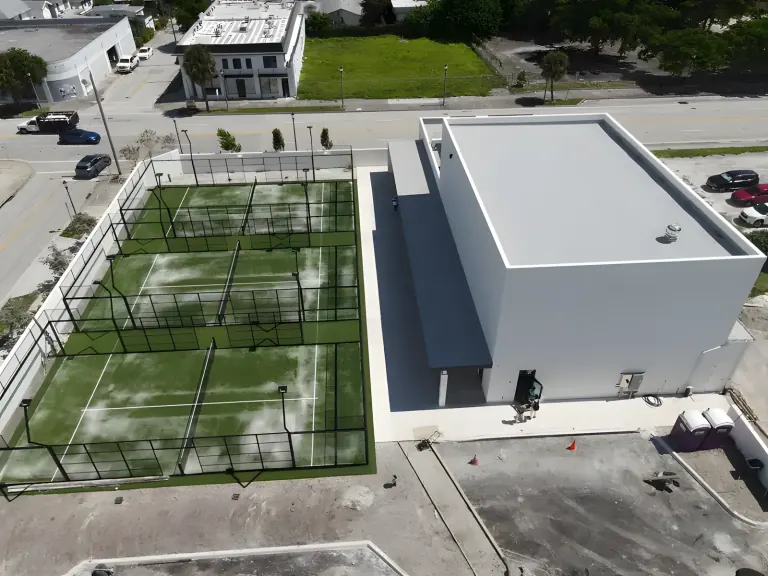
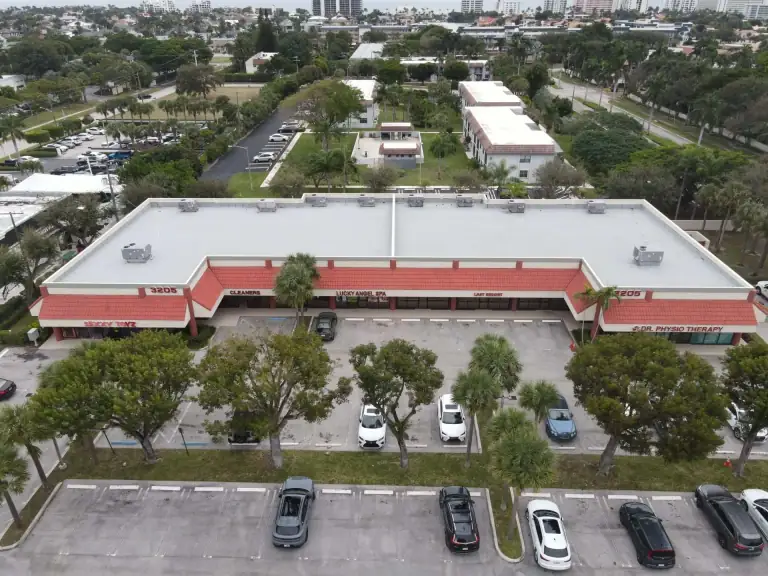
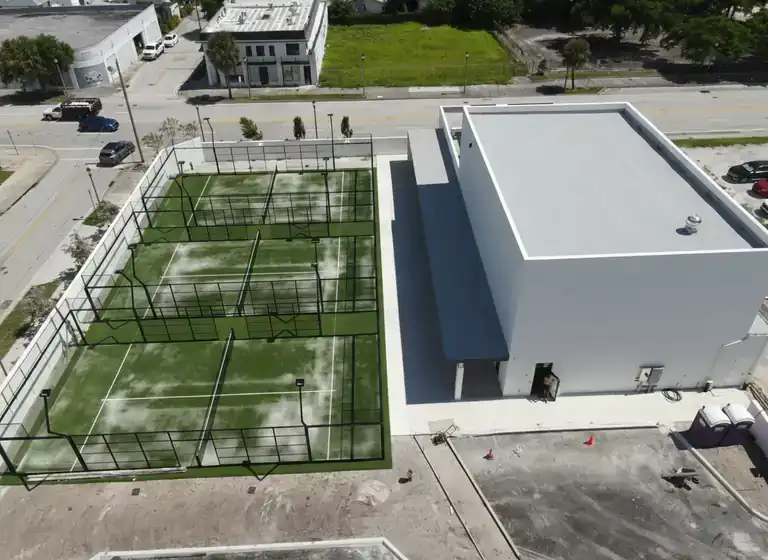
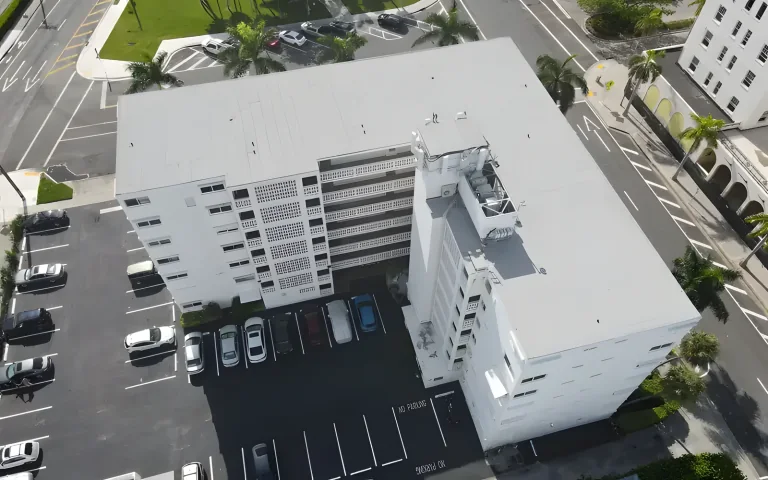
From the offices along Glades Road in Boca Raton to the warehouses at the Port of Palm Beach in Riviera Beach, many of the county's businesses sit under flat and low-slope roofs. A pitched roof sheds water by gravity. A flat roof depends on a slight slope, clear drains and sound seams to get water off, and when any one of those slips, water sits. Standing water is where most commercial roof leaks begin.
Molsbee Roofing has worked on commercial and residential roofs in Palm Beach County since 1975, from our shop in Lake Worth Beach. This is the upkeep we recommend for a business with a flat roof, what a professional inspection adds, and how local conditions change the answer.
Why do flat roofs here need more attention?
- Ponding. Low spots hold water after the rain stops. Standing water wears the membrane, grows algae and adds weight to the deck.
- Summer rain. Daily storms from June onward put a heavy load on drains in a short time, and wind-driven rain finds parapet caps, coping and wall flashing first.
- Sun. A horizontal surface takes the full force of the sun all day, aging sealants and exposed membrane.
- Salt. Along the lagoon and the Intracoastal, salt reaches edge metal, coping and fasteners first.
- Foot traffic. Every service visit to an air handler or exhaust fan is a chance for a dropped tool or a heavy boot to damage the membrane.
Does location in the county change the roof?
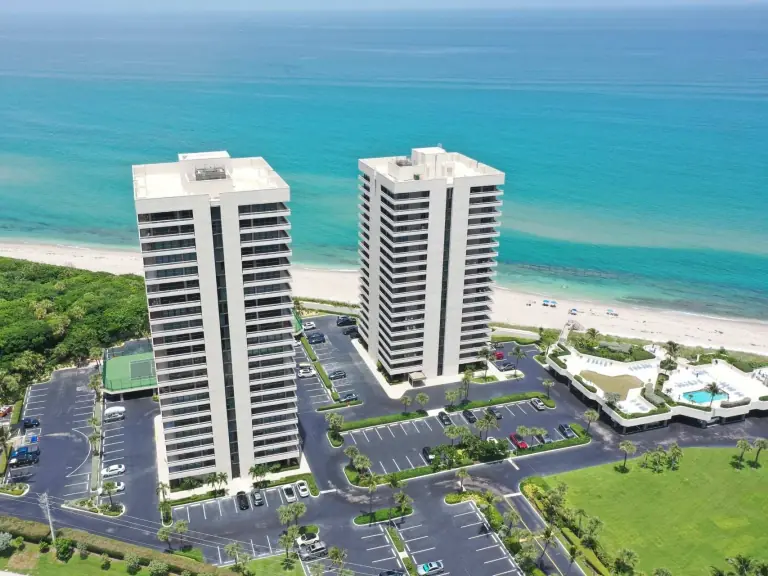
It does. The design wind speed sets how the membrane, insulation and edge are attached, and it depends on the parcel. The port frontage and Broadway shops in Riviera Beach, Singer Island and the barrier-island towns are in the 170 mph band. Most of the mainland, including the Glades Road offices, Town Center and the Boca Raton Innovation Campus on Yamato Road, is in the 160 mph band. The whole county is in the wind-borne debris region.
Salt exposure follows the water. A strip center a few blocks from Lake Worth Lagoon needs coping, edge metal and fasteners specified for salt; a warehouse well inland mostly fights rain and sun. In Lake Park, the Mission-style parapet flats that survive from the Kelsey City era of the 1920s sit under the town's Historic Preservation Board, so parapet and tile detail are reviewed before the roof is changed.
What should the building owner check after heavy rain?
You do not need to be a roofer to spot the early signs. After a heavy storm, and at least monthly during the wet season:
- Confirm drains and scuppers are clear and water is leaving the roof
- Note any water still standing well after the rain has stopped, and where
- Look for obvious tears, blisters or loose seams in the membrane
- Check that edge metal and parapet caps are secure
- Watch the ceiling below for new stains, especially near drains and equipment
Walk carefully and stay away from the roof edge. If anything looks wrong, photograph it and call a roofer rather than attempting a repair. Before hurricane season starts in June, also clear loose items off the roof and ask your mechanical contractor to confirm equipment is secured to its curbs.
What does a professional inspection check?
A roofer looks at the details that decide whether the roof keeps working:
- Seams. On TPO, seams are heat-welded with hot air; we probe them with a seam tool for gaps, fishmouths and separation, paying most attention at corners and T-joints.
- Flashing at walls, parapets, curbs, pipe penetrations and pitch pans, where sealant ages first.
- Drains, scuppers and overflow drainage, including strainers, clamping rings and the flashing around each drain.
- Edge metal and coping. On a low-slope roof these must be tested to the ANSI/SPRI ES-1 standard the code references, and loose coping is how wind starts peeling a membrane.
- Ponding patterns, which often point to a deck, slope or insulation problem underneath.
- Equipment: curb flashing, supports, condensate lines that drain onto the roof, and damage around units from service traffic.
- Fastener back-out on mechanically attached systems, which shows as bumps under the membrane.
We recommend a professional inspection at least once a year, ideally before hurricane season, and after any strong storm.
What can't an inspection see without opening the roof?
The membrane can look sound while the insulation below it is wet. From the surface, we can see blisters, soft areas underfoot and staining inside the building that suggest trapped water, but the only way to confirm the condition of the insulation and deck is a core cut: a small test opening, patched the same visit. When that is worth doing, we explain why and list it separately in the scope.
What are the common fixes?
- Ponding: add or relocate drains, or install tapered insulation and crickets to steer water toward them
- Punctures and tears: patch with compatible membrane, heat-welded on TPO or adhered to match the system
- Failed seams: clean, prepare and re-weld or re-adhere
- Equipment damage: re-flash curbs and add walkway pads where technicians walk
- Wet insulation: remove and replace the affected area before the water spreads
When does repair become recover or replacement?
The Florida Building Code, 8th Edition, applies to commercial roofs too. If repairs, replacements or roof recovering cover more than a quarter of a roof system or section in any 12-month period, the code generally requires replacing or recovering the roof covering across that entire system or section to meet current code requirements. If that system or section was built, repaired or replaced in compliance with the 2007 Florida Building Code or a later edition, only the portion being worked on must meet applicable current code requirements. Our inspection helps determine which applies to your roof. A recover, a new membrane over the old roof, is allowed only when the existing roof is dry and sound; it is not allowed over wet or deteriorated roofing, or where two roofs are already in place. We track repairs against those lines so replacement is a planned decision, not a surprise.
Permits for flat-roof work use the county's Form 400 for low-slope roofs, and some towns add their own: Palm Beach Gardens posts its own Reroofing Form 400, and Palm Springs requires an in-progress inspection on every flat roof. Royal Palm Beach publishes a commercial review window of 15 to 30 business days. For system options, see flat roofing and TPO roofing.
How we document your roof
The inspection is free. We photograph every finding, from the drain that is half blocked to the seam that is starting to open, so the property manager, the owner and the tenant all see the same thing. Then you receive a written scope with the price before work starts, naming the membrane, the repair method, any core cuts and how the interior and equipment below are protected while the crew is overhead. If the building has a claim after a storm, those dated photos are ready for the adjuster.
Who stands behind the membrane
On a TPO roof, the manufacturer decides who is qualified to install its membrane. Molsbee is Carlisle-certified for TPO, and also a GAF Certified Contractor and an Owens Corning Preferred Contractor, so repairs and new roofs are done to the manufacturers' requirements and carry the manufacturers' product warranties. Our lifetime workmanship warranty covers the installation. We hold Florida certified roofing contractor license CCC1327429, have served Palm Beach County businesses since 1975, and after a repair or re-roof we provide a roof certification letter for your insurer when asked.
More on our commercial roofing work.
Next step
Call (561) 318-8624 or request a free roof inspection for your building.