


December 10, 2024 · 7 min read · Maintenance
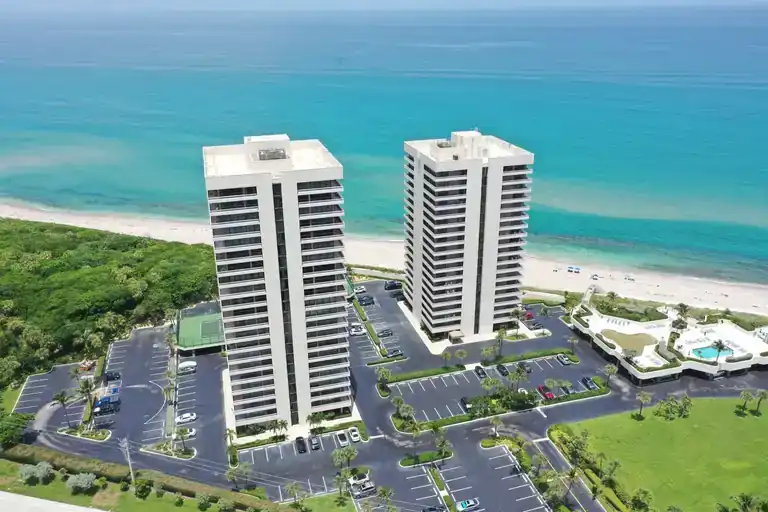
The ocean is part of your roof's weather
Living near the Atlantic in Palm Beach County means salt in the air and humidity most of the year. Neither one tears a roof off. They work slowly, on the parts of the roof that are easiest to overlook: the metal, the fasteners, the seals and the wood underneath. Knowing where they do their damage tells you where to look, and what to specify when the roof is replaced.
Molsbee Roofing has roofed homes along this coast since 1975, from the barrier islands to the western communities. This is what we see salt and humidity do, and how a roof is built and checked to stand up to them.
Where does salt do the most damage?
Salt settles on the roof, pulls moisture out of the air and holds it against metal. Corrosion follows wherever there is metal:
- Flashing at walls, chimneys, valleys and roof edges
- Drip edge and eave metal, which is often where corrosion shows first
- Fasteners and nail heads, which can rust through and lose their hold
- Metal roofing panels, especially at cut edges, scratches and the underside of laps
- Rooftop equipment curbs and the flashing around them
It also works on the parts that seal the roof. Rubber pipe boots, skylight gaskets and plastic vent caps break down faster in sun and salt, and each one is a place where water can get in.
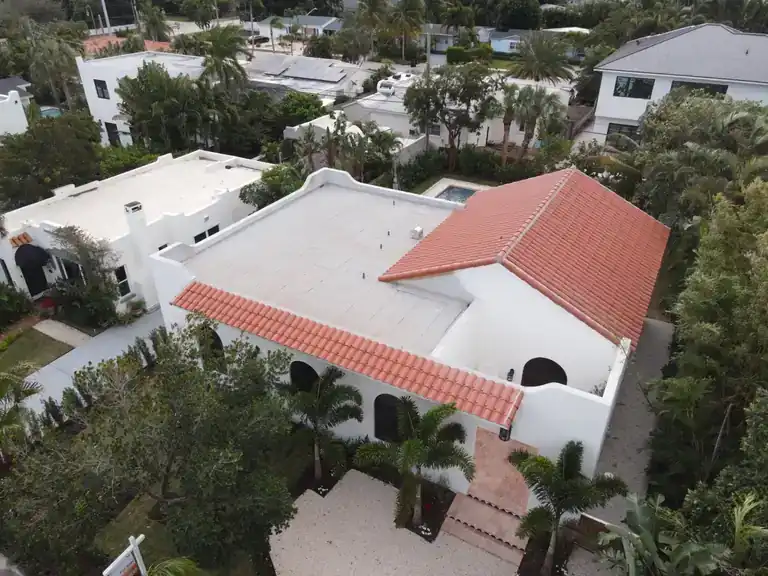
Clay and concrete tile hold up well to salt themselves. On a tile roof, the weak points are the metal around the tile and the underlayment beneath it, not the tile.
Which parts of the county get the most salt?
Exposure follows the water, and some addresses take it from two sides. In Jupiter, where the Loxahatchee River meets the Atlantic at the inlet, salt reaches roofs from both the ocean and the river mouth. In Manalapan, a single estate can run from the beach to the Intracoastal, taking spray on one side and wind across the lagoon on the other. North Palm Beach streets such as Yacht Club Drive and Paradise Harbour Boulevard sit right on Lake Worth Lagoon. In Ocean Ridge, where more than half the town's area is water, corrosion at the eaves is usually the first thing an inspection finds.
Move inland and the load changes. Wellington and Jupiter Farms have no salt exposure to speak of; there the wear comes from sun, daily summer storms and wind.
What does humidity do?
Humidity keeps things damp. On the surface, it feeds algae, mildew and mold, which hold water against shingles and in tile laps and leave dark streaks on shaded slopes. Below the surface, it is harder on wood: roof decking, fascia boards and trusses in a poorly ventilated attic can stay damp long enough to soften, and nails in damp wood corrode from the inside.
Ventilation is the main defense in a vented attic. Balanced intake at the soffits and exhaust at the ridge move damp, hot air out before it condenses on the underside of the deck. Attic heat also ages underlayment, so good ventilation protects the layer doing most of the waterproofing. Bathroom and kitchen fans should vent outside, not into the attic, or they feed the problem directly.
Which roofing materials and metals handle salt air?
For homes close to the water, the choice of metal matters as much as the choice of roof:
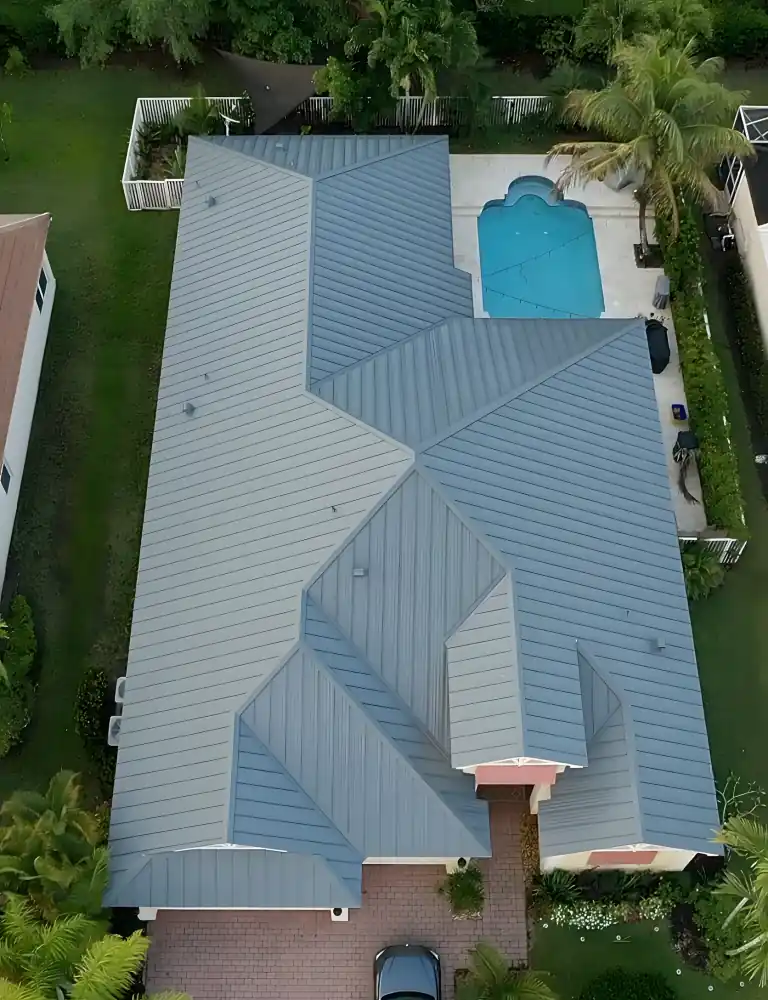
- Aluminum standing seam resists salt far better than coated steel, which is why it is a common choice for oceanfront metal roofs. Near salt water, ask which panel metal and finish the scope names before choosing.
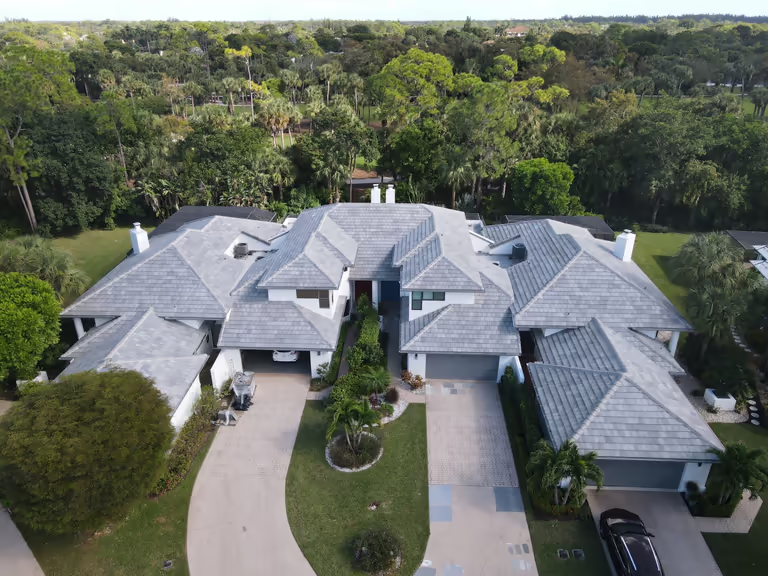
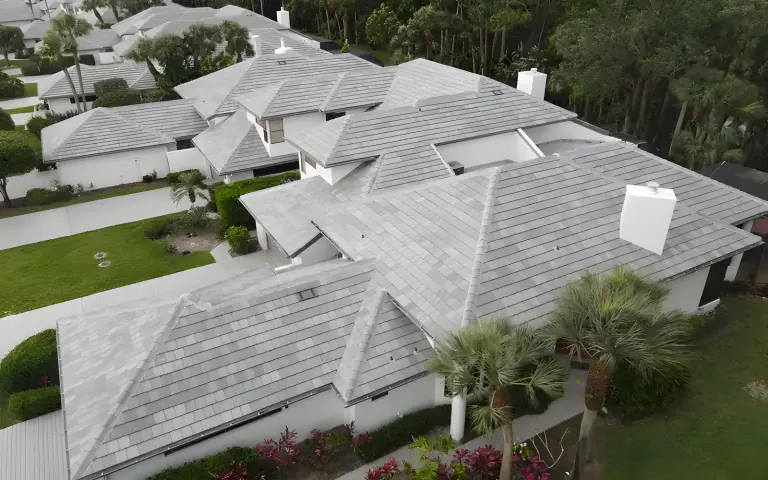
- Clay and concrete tile resist salt and humidity well; pair them with flashing in a metal suited to the coast, such as aluminum or stainless.
- Architectural shingles handle salt reasonably; choose an algae-resistant line, and pay attention to the edge metal and flashing.
- Fasteners must be corrosion-resistant under the code. Near the water, stainless or a coated fastener approved for the exposure is the right fit; plain steel is not.
Why does mixing metals cause problems?
Two different metals in contact, with salt water between them, set up a small electrical cell and the less noble metal corrodes. Aluminum flashing touching copper, or steel screws through aluminum panels, are common examples. The fix is in the specification: fasteners, clips and flashing that are compatible with the roof they hold, or a separator where two metals must meet. We name the metal of every component in the written scope for exactly this reason.
Does the coast change the code requirements?
It changes the wind load. The whole county is in the wind-borne debris region, and design wind speeds climb from 150 mph in parts of the far west to 170 mph on the barrier islands and along much of the waterfront. Every parcel in Juno Beach, Highland Beach and Manalapan is in the 170 mph band. That number sets the fastening schedule: how many fasteners, how far apart, and how deep into the deck. On a coastal roof, the fastener that rusts is the fastener that stops meeting that schedule.
We specify a self-adhered secondary water barrier over the deck; the Florida Building Code sets secondary water barrier requirements on re-roofs and allows more than one compliant method. On the coast that layer is the last line of defense when wind-driven rain gets past corroded flashing.
What we check on a coastal roof
On an inspection near the water, we look closely at:
- Rust at drip edge, flashing, valleys and fastener heads
- Coating wear and corrosion on metal panels, especially at seams and cut edges
- Contact points where two different metals meet
- Cracked or brittle pipe boots and vent seals
- Algae and staining on shaded slopes
- Attic ventilation, damp decking, rusted nail tips and staining, where the attic is accessible
What we cannot see without lifting tile or opening a section is the underlayment beneath tile that is still in place, or corrosion on fasteners hidden under the covering. If that is the question, we say so and explain what opening a section would show.
Photos first, then a written scope
The inspection is free. We photograph the corrosion, the cracked seals and anything else we find, close enough that you can see what the salt has done. That record matters most for owners who are away for the season, as many are in Highland Beach and Juno Beach. You then receive a written scope with the price before any work starts, naming the metals, the fasteners, the underlayment and how the property is protected while the old roof comes off.
Specified for the coast, backed in writing
Salt is a specification problem as much as a weather problem, and the warranty is only as strong as the materials chosen under it. As a GAF Certified Contractor and an Owens Corning Preferred Contractor, Molsbee installs products that carry the manufacturers' product warranties, and our lifetime workmanship warranty covers the installation itself. We have roofed this coast since 1975 under Florida certified roofing contractor license CCC1327429, and after a repair or re-roof a roof certification letter for your insurer is available on request. For material options, see metal roofing and tile roofing.
Next step
If your home is near the water and the roof has not been looked at recently, call (561) 318-8624 or request a free roof inspection.