



December 13, 2024 · 7 min read · Maintenance
A roof inspection is how you find out before the ceiling tells you
Most roof problems in Palm Beach County start small and stay quiet for a long time. A cracked tile, a split pipe boot or a lifted piece of flashing can sit on the roof for months before a heavy storm drives water through it. By the time a stain shows on the ceiling, the water has usually been through the underlayment and the deck first. A regular inspection is how you find those things while they are still repairs.
Molsbee Roofing has inspected, repaired and replaced roofs in Palm Beach County since 1975. Here is what a thorough inspection covers on each type of roof, what it can and cannot tell you, and how often it makes sense.
Why do roofs here need more attention?
The county's weather works on a roof from several directions at once:
- Sun. Strong year-round sun dries out shingles, sealants and rubber pipe boots. Attic heat ages underlayment, sometimes faster than the tile or metal above it.
- Rain. Summer storms are short and heavy, and the wind pushes water sideways into roof-to-wall joints, edge metal and penetrations.
- Salt. Closer to the water, salt air works on fasteners, flashing and metal roofing.
- Wind. The whole county sits in the wind-borne debris region. Design wind speeds run from 150 mph in parts of the far west to 160 mph on most of the mainland and 170 mph on the barrier islands.
Wind is not only a coastal concern. On 9 October 2024 an EF3 tornado spawned by Hurricane Milton caused significant damage in Wellington and tracked through The Acreage. On homes in that path we check truss connections and tile attachment, not just the surface.
What does an inspection check on each type of roof?
The covering decides where the problems hide:
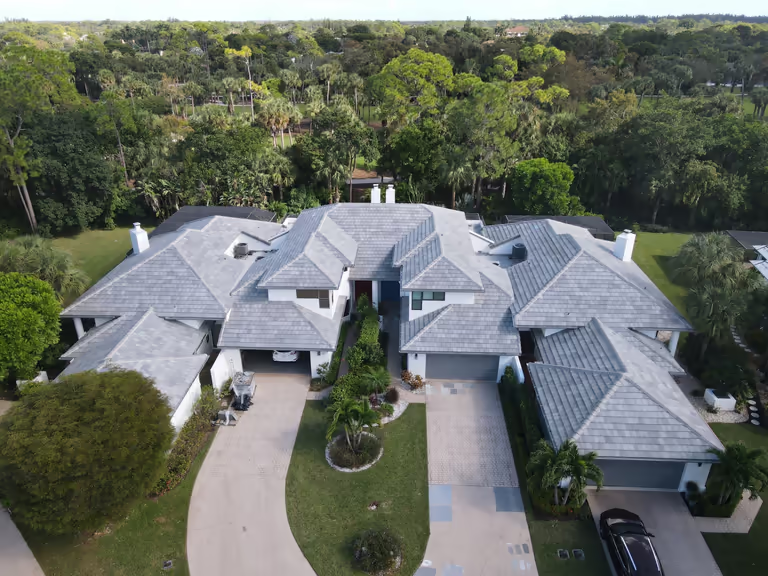
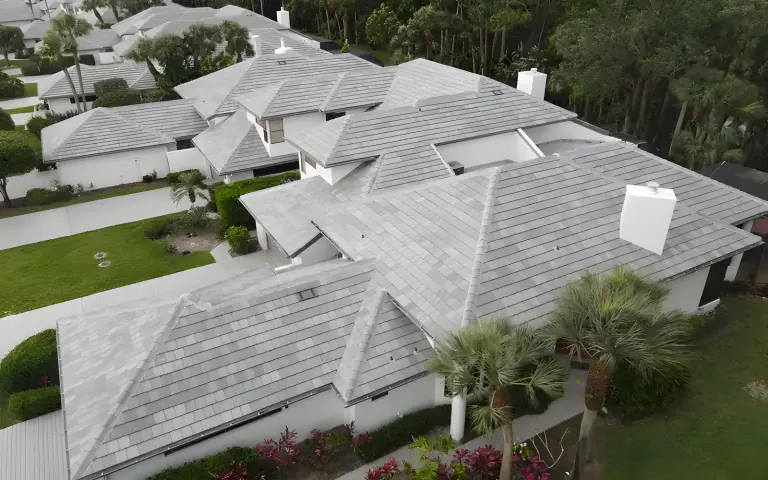
- Tile. Cracked, slipped or broken pieces; loose ridge and hip tile; mortar or adhesive that has let go; and the valleys and headwalls where water runs under the tile onto the underlayment. We lift a tile where it can be done safely to see the underlayment beneath, and our crews wear protective, safe footwear on tile.
- Shingle. Creased or lifted tabs, missing granules, exposed nail heads, and sealant strips that no longer hold. A lifted shingle in a storm is usually a fastening or sealing problem, not just an old shingle.
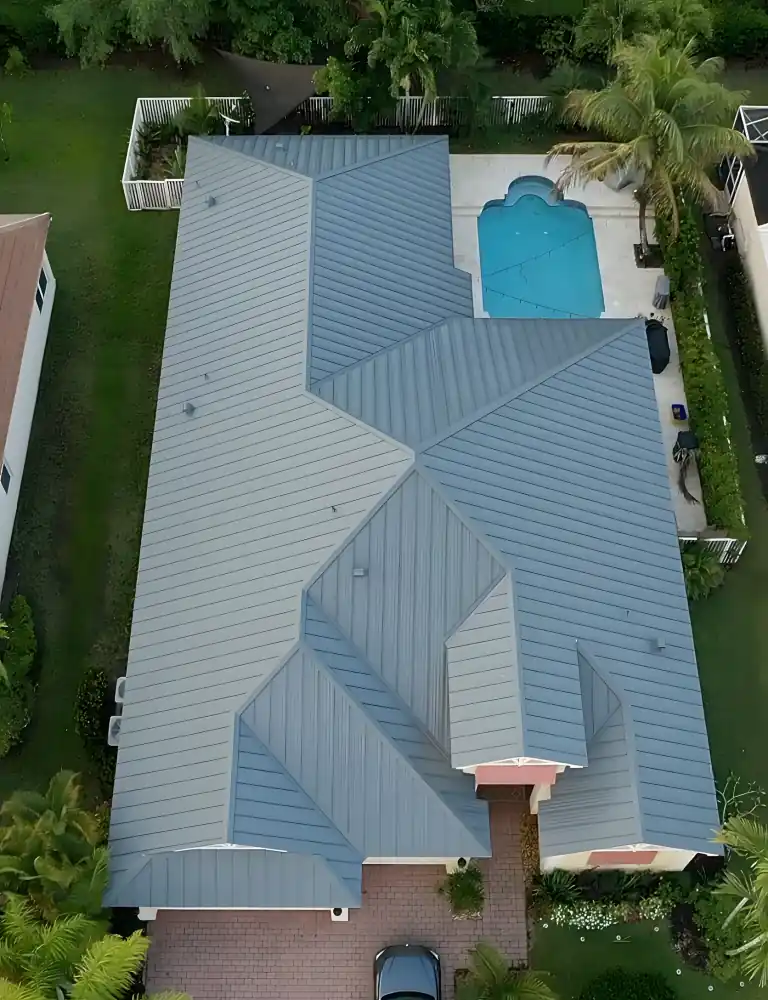
- Metal. Loose or backed-out screws, worn washers on exposed-fastener panels, open seams, corrosion at cut edges and anywhere two different metals touch.
- Flat sections. Ponding, blisters, open seams, blocked drains and scuppers, and the flashing at walls and curbs.
On every roof we check flashing at walls, chimneys, skylights and valleys, every pipe boot and vent, the edge metal and drip edge, and any soft or spongy spots underfoot that suggest a wet or damaged deck.
What does the attic tell you?
If the attic is accessible, it shows what the roof surface cannot. We look for water staining on the decking and trusses, daylight where there should be none, rusted nail tips, damp or displaced insulation and blocked soffit intake. The attic is also where you can see how the roof is held on: the nailing pattern into the trusses where it is visible, and whether the roof-to-wall connections are toe-nails, clips or straps. Those details matter in a storm, and they are what a wind mitigation form records.
What can't an inspection see without opening the roof?
An honest inspection has limits, and you should know them. On a tile roof, the underlayment is doing most of the waterproofing, and we can only see it where a tile can be lifted or where it is exposed at an edge. On a shingle roof, the deck under sound-looking shingles cannot be seen from above. Where spray foam covers the underside of the deck, the attic view is gone too. Old leaks that have dried out may leave a stain but no clue about when they happened.
When a question can only be answered by lifting more tile or opening a section, we tell you that, explain what it would show and include it in the scope as a separate item. We do not guess and call it a finding.
How often should the roof be inspected?
A sensible rhythm for most homes here:
- Once a year, ideally in spring, before hurricane season starts in June
- After any named storm or strong wind event, even if nothing looks wrong from the ground
- Before you buy or sell a home, so the roof's condition is known up front
- When your insurer asks about the roof's condition at renewal
Homes left empty for part of the year deserve a closer eye. In Highland Beach and Juno Beach, a large share of homes stood empty at the last census, mostly seasonal. A leak that starts in August can run for months before anyone sees it, and dated photos are the record an absent owner has.
Why does the age of the roof's permit matter?
The quarter-roof rule considers how much of a roof system or section is repaired, replaced or recovered in any 12-month period. Above a quarter, the roof covering across that entire system or section generally must be replaced or recovered to meet current code requirements. If that system or section was built, repaired or replaced in compliance with the 2007 Florida Building Code or a later edition, only the portion being worked on must meet applicable current code requirements. We check which applies before we price. The age of the house does not settle it, because many roofs have been replaced since the house was built. The permit history for the address, which many towns publish online, and the existing roof itself are what the inspection checks, so it can tell you whether repairs are still an option or whether a roof system or section has become a replacement conversation.
A roofer's inspection is also different from a buyer's home inspection. A home inspector covers the whole house and often looks at the roof from a ladder or the ground. A roofer walks it where it is safe to, checks the attic and knows how the local code will treat the next repair.
Photos, then a written scope with the price
The inspection is free. Every finding is photographed and labeled, so you are looking at your own roof, not a description of it. Keep those photos on file as a record of the roof's condition. If work is needed, you get a written scope with the price before anything starts, naming the repair method, the materials and how the property below is protected. If nothing is needed, we tell you that.
Who is doing the inspecting
An inspection is only as good as the roofer behind it. Molsbee's inspections are done by a Florida certified roofing contractor, license CCC1327429, that has worked Palm Beach County roofs since 1975. Because we are a GAF Certified Contractor and an Owens Corning Preferred Contractor, the repairs we recommend are made to the manufacturers' installation requirements, and the work carries our lifetime workmanship warranty along with the manufacturers' product warranties. After a repair or re-roof, we provide a roof certification letter for your insurer when asked.
If the inspection points toward replacement, our guide on when to replace your roof walks through the decision.
Next step
Call (561) 318-8624 or request a free roof inspection, and we will put your roof's condition in photos and in writing.