★★★★★
I am so happy with our decision to hire Molsbee roofing to install our new roof. Their communication and service is A+!! Working with Matt through the process was seamless! Thank you Molsbee my roof looks amazing!Read on Google
Request your free inspection
Since 1975 · 4.8 stars across 200+ Google reviews · Florida Certified Roofing Contractor CCC1327429 · Lifetime Workmanship Warranty · GAF Certified Contractor · Owens Corning Preferred Contractor
 50 Years
 GAF Certified Contractor
 Owens Corning Preferred Contractor
 BBB
BBB Lifetime Workmanship Warranty
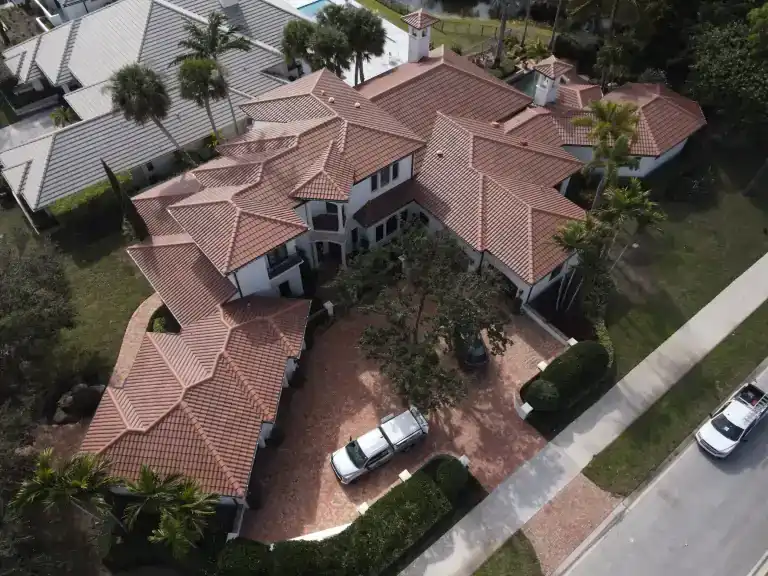
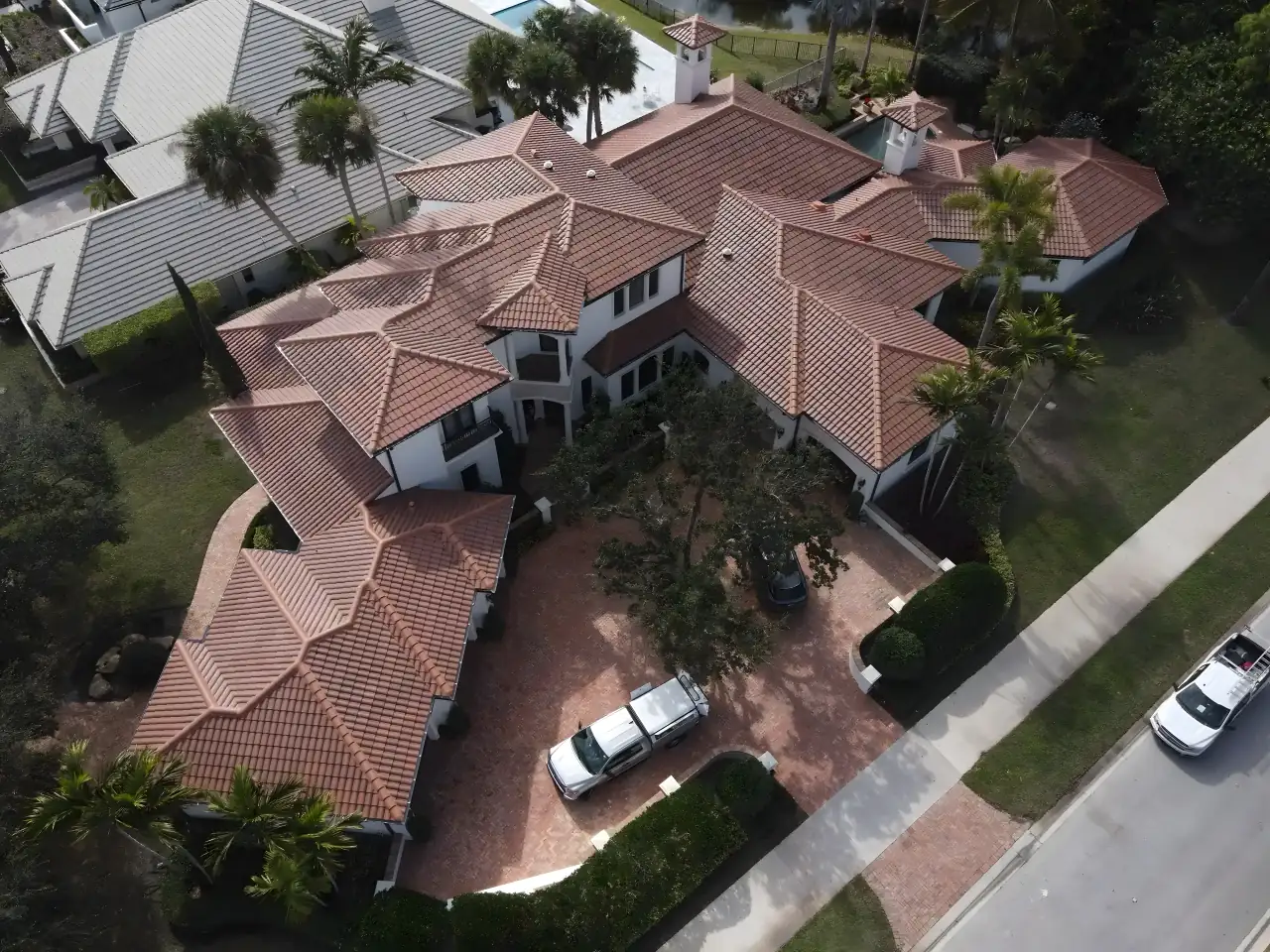
A Molsbee roof inspection in Jupiter Farms is free and covers every roof on the property you want looked at: the house, the detached garage, the barn, the workshop and any lanai or carport. A roofer measures each one, reads the covering, opens it at chosen points where that will tell us something, checks the flashings and penetrations, and looks up the permit history, which helps show how the quarter-roof rule would treat a larger repair.
You get photographs of each building and a written report that says what needs doing now, what can wait, and what each item costs. Molsbee Roofing is a family business that has inspected and built roofs across Palm Beach County since 1975, from Lake Worth Beach, licensed CCC1327429, and the phone at (561) 318-8624 is answered 24 hours a day.
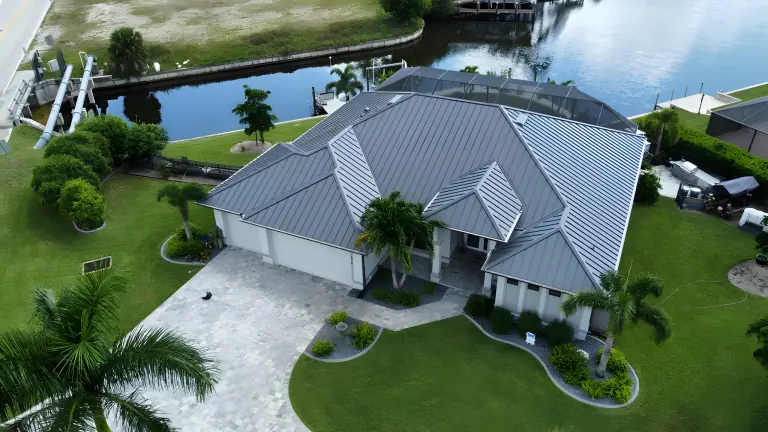
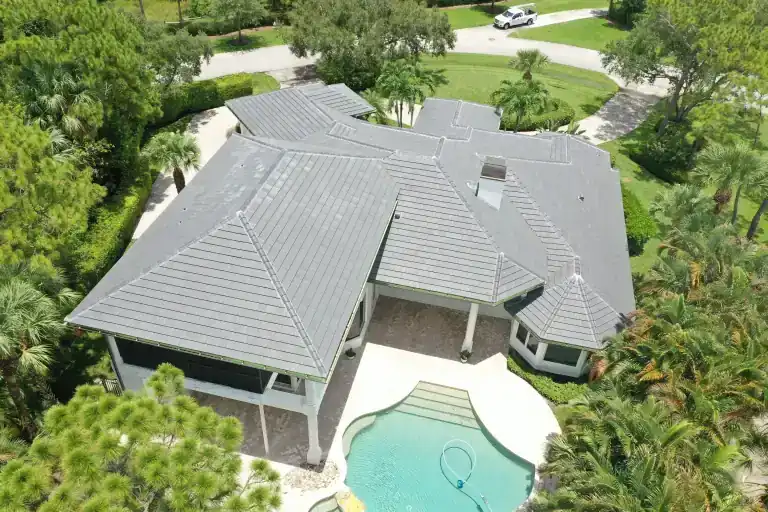
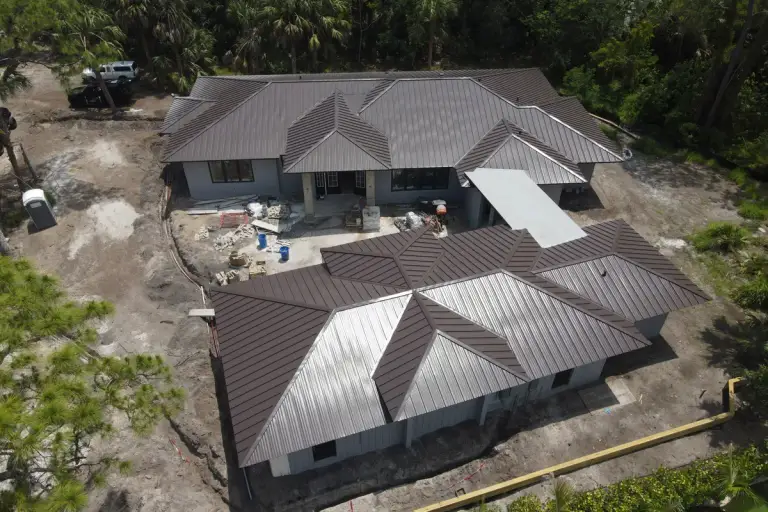
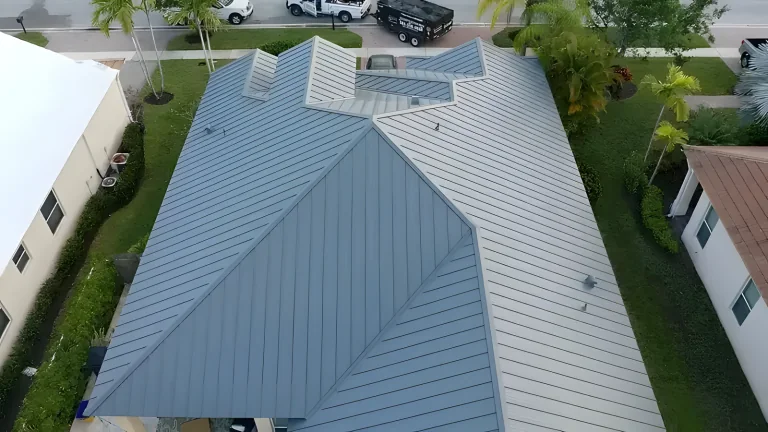
A property here can carry several roofs of different ages and coverings, and a single verdict for all of them is no use to you. Each gets its own measured area, condition notes, photographs and recommendation.
The usual result is a sequence rather than a single job: the house this year, the workshop in a couple of seasons, the barn fine apart from a pipe boot. That order is what the inspection is for, and it lets you plan the spending instead of meeting it all at once.
We look up each roof's permit record first. If repairs, replacements or roof recovering cover more than a quarter of a roof system or section in any 12-month period, the code generally requires replacing or recovering the roof covering across that entire system or section to meet current code requirements.
If that system or section was built, repaired or replaced in compliance with the 2007 Florida Building Code or a later edition, only the portion being worked on must meet applicable current code requirements. Our inspection helps determine which applies to your roof.
The tornado Hurricane Milton spun off in October 2024 tracked through Jupiter Farms, and every summer brings squalls that test edges and ridges. Wind damage is not always visible from the ground: a shingle creased and resealed, a tile shifted a few inches, a metal edge that lifted and settled back, a ridge cap missing fasteners.
We look for those signs roof by roof and photograph each one, so you know whether a building needs a repair now or simply a closer look next season.
You receive photographs of every roof, the measured area of each, what we found at the points we opened, the condition of the flashings, penetrations and junctions, and what the deck seems to be doing. Areas we could not see without opening the roof are marked as not seen.
Then a plain list per building: what needs doing now, what to watch, and a written price for each item. If nothing needs doing this year, that is the report you get, and it costs you nothing either way.
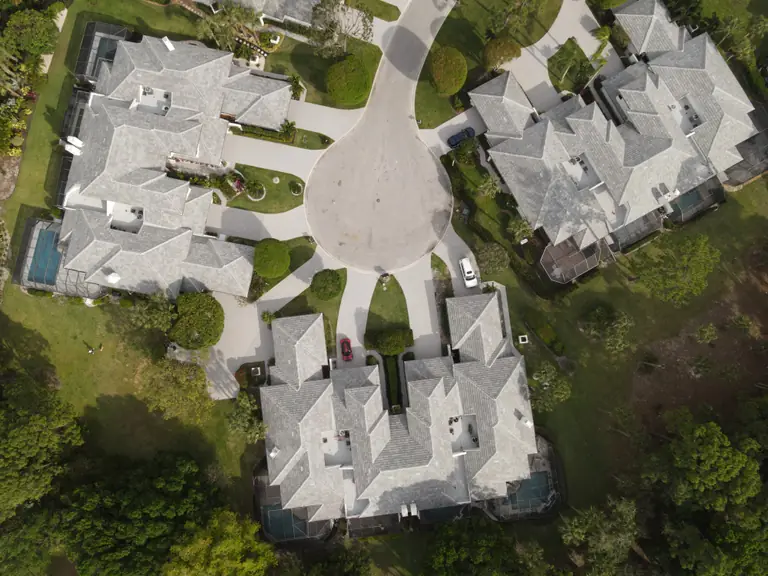
For work in Jupiter Farms, confirm requirements with the building department responsible for the property and complete any required historic or HOA review before ordering materials or beginning work.
Jupiter Farms is unincorporated Palm Beach County west of Jupiter, so the roofing permit does not go to the Town of Jupiter. It is filed with the county's Planning, Zoning and Building Division through the ePZB portal, where a single-family re-roof is self-issued once the product-approval questions pass and lapses if unpaid within ten days. County inspectors sign off roof framing and sheathing and, on metal, the in-progress stage.
From 1 October 2026 every county application carries a flood legend, and the county re-roof worksheet pre-prints 170 mph unless the parcel tool shows otherwise.
Out along Indiantown Road the design wind speed is 160 mph, and all of unincorporated Palm Beach County is in the wind-borne debris region. We lay a self-adhered secondary water barrier over the deck before the new roof.
I am so happy with our decision to hire Molsbee roofing to install our new roof. Their communication and service is A+!! Working with Matt through the process was seamless! Thank you Molsbee my roof looks amazing!Read on Google
I recently was in the market for a new roof. After many interviews with various roof companies. I revisited my first choice - Molsbee Roofing mainly due to Merrick. Merrick took time to explain thoroughly the process and stood by everything he promised. Nicole's customer service was also exceptional!Read on Google
Nothing. Our roof inspection is free for every building you want looked at, and it stays free whether or not any of it turns into work for us.
A roofer walks each roof, photographs what is there and hands you a written report with prices for anything that needs doing. We would rather be the company you call when a roof is actually due than the one that sold you a roof you did not need yet.
For a county permit inspection, the usual failures are wrong or missing fasteners, sheathing not nailed to the schedule, a secondary water barrier absent or poorly lapped, and flashings that do not match the approved product; the county checks framing and sheathing and, on metal, adds an in-progress visit. For a condition inspection like ours, the red flags are soft decking, cracked or lifted covering, failed pipe boots and wall flashings, and junctions on added structures that have let water in.
No, and it is worth knowing which you need. Ours is a roofer's condition inspection: measured areas, photographs and a written report on what each roof needs and what it would cost.
A buyer, lender or agent sometimes asks for a specific signed form, and that is a different document, so ask exactly which form they want before you book. After we repair or re-roof, we provide a roof certification letter if your insurer asks for one.
The state's My Safe Florida Home program also offers free wind-mitigation inspections to homeowners who qualify.
Once a year for the house and anything with a low-slope section, and again after any storm that brings down branches around the yard. A blocked drain on a lanai or a failing junction does its damage quietly, so an annual look catches it while it is still a repair.
Simple metal outbuildings can go longer between checks. Any interior stain, however faint, is worth a visit, because a faint stain usually marks an old leak rather than a new one.
In ranges, and honestly about the uncertainty. What we can be specific about is the evidence: how the covering is wearing, what the penetrations and edges look like, whether the deck feels sound underfoot, and whether the permit record shows the roof was replaced to the modern code.
That turns a guess into a plan. The report gives you a sequence for each building rather than a single verdict, so you can plan the work over several years instead of all at once.