




November 10, 2024 · 8 min read · Replacement
A roof replacement, start to finish
A re-roof is a sequence, and most of the stress comes from not knowing what happens next. This guide walks through each stage of a Palm Beach County roof replacement the way we run it at Molsbee Roofing, from the first visit to the paperwork you keep. We have been replacing roofs in this county since 1975, working from our office in Lake Worth Beach.
Step 1: The free inspection and the written scope
Every replacement starts with a free roof inspection. We look at the covering, the flashing, the roof-to-wall joints, the edge metal, the penetrations and the attic where it is accessible. We are also plain about limits: the underlayment under intact tile, and the deck beneath it, cannot be fully judged until the roof is opened.
You receive photos of the findings, then a written scope with the price before any work starts. The scope names the covering, the underlayment, the fastening, the flashing and edge metal, the permit, cleanup, and exactly how any concealed deck damage found during tear-off will be documented and priced. For what shapes that price, see our guide to roof replacement cost in Palm Beach County.
Step 2: Approvals and the permit
If your home is in an association or a historic district, that approval usually comes first. Inside PGA National, the Architectural Review Committee approves a single-family re-roof before the city filing. In West Palm Beach's El Cid, Flamingo Park or Old Northwood, historic staff review exterior changes before the permit.
Then we file the permit with your town's building department. Each has its own portal and forms: Civic Access in West Palm Beach, Boca eHub in Boca Raton, JCDS in Jupiter, ProjectDox in Wellington, and the county's ePZB portal for unincorporated addresses. The permit is issued under our license, not in your name.
Step 3: Getting the house ready
A few days before the start, it helps to:
- Move vehicles out of the driveway and away from the walls.
- Bring in patio furniture, planters and anything hanging from the eaves.
- Clear items stored in the attic, since tear-off can shake dust loose.
- Take down pictures and mirrors on walls that share the roof line.
- Plan a quiet spot for pets; tear-off is loud.
We place the dumpster and the materials where they do the least harm to your driveway and landscaping.
Step 4: Tear-off and the deck
The old covering comes off down to the deck. On a tile roof that can mean clearing old mortar and battens before the deck can be inspected. Our crews wear protective, safe footwear on tile roofs.
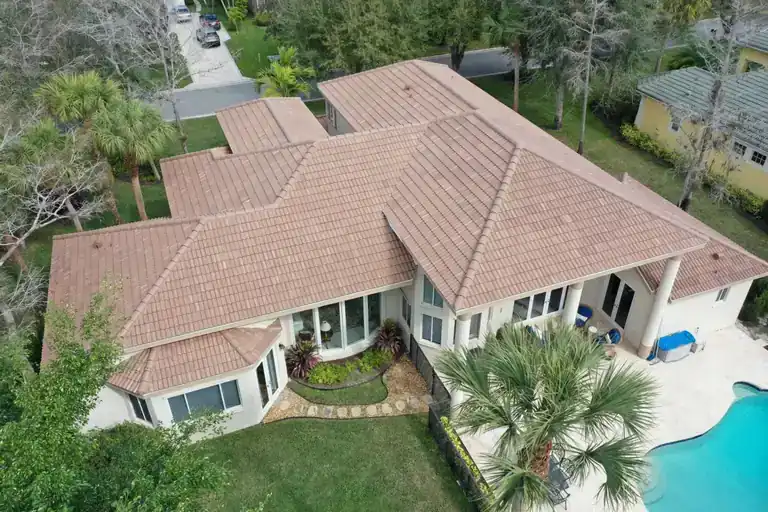
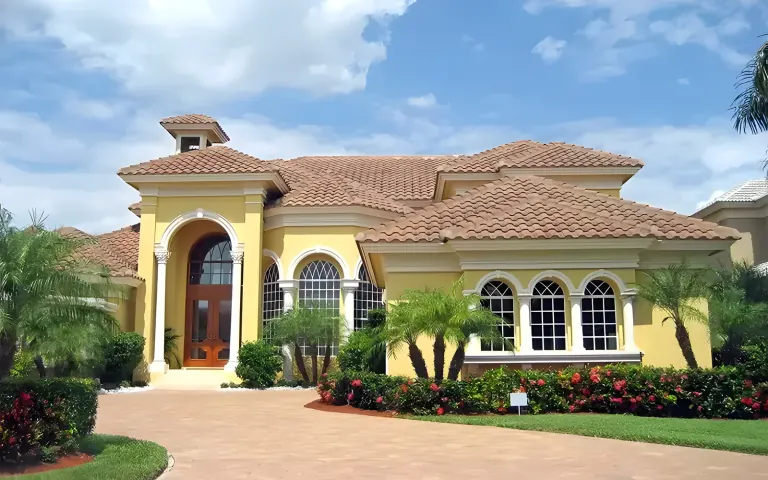
On sound clay barrel tile there may be another option: detach and reset. We lift the tile, replace the underlayment and reset the same tile. It keeps the look of the house, which matters in historic districts where in-kind work is favored.
Once the deck is exposed, soft or rotted boards and sheathing are found. We stop on that section, photograph the damage and price the repair as its own line for your approval before anything is covered. Re-nailing or replacing sheathing is done to the current fastening schedule.
Step 5: The secondary water barrier and underlayment
On the re-roofs we build, a secondary water barrier goes on the deck before the new roof. It is the layer that keeps water out if wind strips the covering in a storm. Depending on the method, the underlayment can serve as the secondary water barrier or go over it, and the scope names which. Then comes the flashing at walls, valleys and penetrations, and the new edge metal. Near the water, edge metal and fasteners are specified for salt air.
Step 6: The inspections
Towns inspect a re-roof in stages, and the roof is kept dried in between visits. West Palm Beach is a good example: the City inspects as it requires for the job, drawing on roof framing, roof metal or tin tag, sheathing, roofing in progress and final inspections, and in some cases it may accept inspector-approved affidavits or photographs. Greenacres requires live sheathing, tin tag and in-progress inspections before the final. We book each inspection and sequence the work so the next layer is not installed until the inspection before it has passed.
Step 7: The new roof goes on
The covering is installed to the product approval for your wind band: 150 mph inland, 160 mph across most of the mainland, 170 mph on the barrier islands. Ridge, hip and edge details are finished and penetrations sealed.
How long does a roof replacement take in Palm Beach County?
It depends on the size and material of the roof, the weather, deck repairs found at tear-off, material delivery and inspection scheduling. Hurricane season, June through November, brings afternoon storms that can pause work. A tile roof with mortar to clear takes longer than a shingle roof of the same size. We give you a schedule at the start and keep you updated as inspections are booked.
Step 8: Cleanup and the final inspection
Debris goes to the dumpster as the work progresses. At the end the dumpster is removed and the yard, driveway and beds are cleaned and swept for fasteners. The town's final inspection closes the permit.
Step 9: The paperwork you keep
At the end of the job you receive:
- The closed permit and the final inspection record.
- Our lifetime workmanship warranty and the manufacturers' product warranties, in writing.
- When your insurer asks for one, a roof certification letter for your insurer.
- The photos from the job, including any deck repairs made before they were covered.
Who is on your roof
Molsbee holds Florida certified roofing contractor license CCC1327429, and our company has roofed Palm Beach County since 1975. We are a GAF Certified Contractor and an Owens Corning Preferred Contractor, and those manufacturer credentials stand behind the materials while our lifetime workmanship warranty stands behind the install.
Start with the inspection
Call (561) 318-8624 or request a free roof inspection. You will know what your roof needs, and what each step will look like, before any work starts.