


December 22, 2024 · 9 min read · Storm Prep
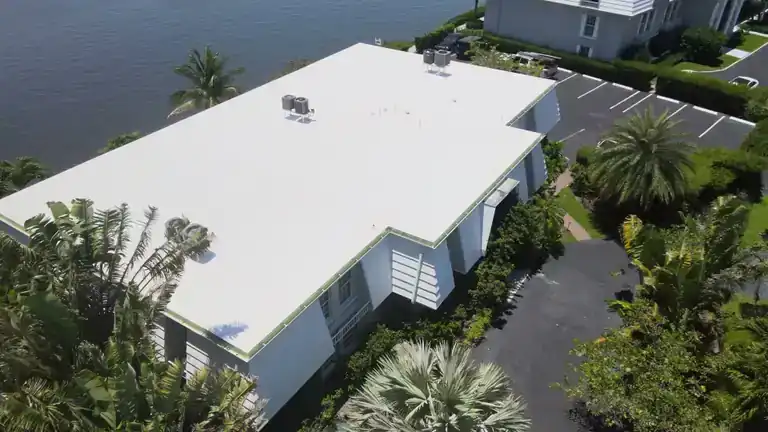
Getting a Palm Beach County roof ready for hurricane season
Hurricane season runs from June through November. No roof is truly hurricane-proof, but a roof built and maintained to the right standard holds its covering, keeps its underlayment dry and stays attached to the walls. The time to find its weak points is spring, while there is still room to fix them.
Molsbee Roofing has worked on roofs across Palm Beach County since 1975. Here is what actually makes a roof stronger against a storm, and what a pre-season inspection can tell you.
What wind speed does a roof here have to be built for?
The whole county sits in the wind-borne debris region under the Florida Building Code, 8th Edition. Design wind speeds run in three bands: 150 mph inland, 160 mph on the mainland, and 170 mph on the barrier islands and along the oceanfront. Jupiter's beach, Intracoastal and Loxahatchee River frontage is in the 170 mph band; the island of Palm Beach is entirely in it. The fastening schedule, the underlayment and the edge details all follow from the band your house is in, and the permit inspector checks them.
What upgrades make the biggest difference?
Secondary water barrier. When the old covering comes off, the roof we specify puts a secondary water barrier on the deck before the new roof goes on. The code allows more than one compliant method, and the scope names the one we use on your roof. If wind strips tile or shingle, that layer is what keeps rain out of the attic.
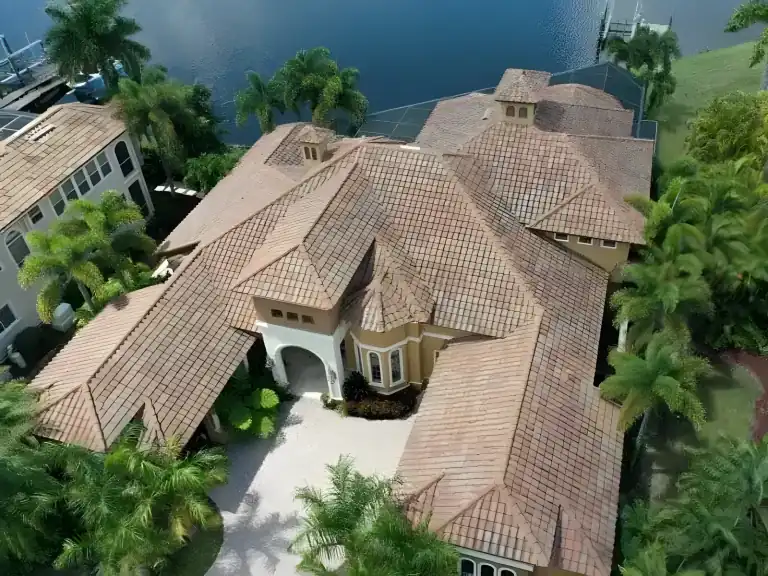
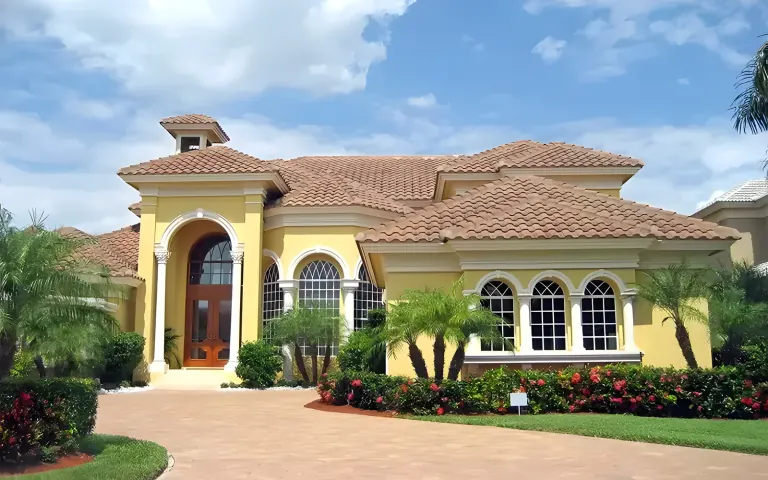
Underlayment in good condition. On a tile roof, the tile is the shield and the underlayment is the waterproofing. Attic heat ages underlayment faster than the tile above it, so a tile roof can look fine from the street while the layer underneath has gone brittle. On clay barrel tile we can detach and reset: lift the tile, replace the underlayment and reset the same tile.
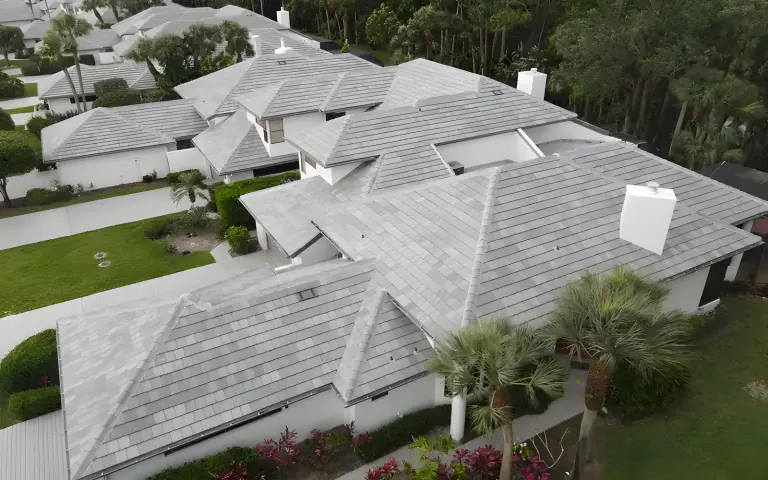
Fastening and attachment. New roofs are fastened to the schedule for your wind band. On older homes, the question is how the existing tile, shingle or panels are attached and whether the deck is nailed well enough to hold them.
Roof-to-wall connections. Hurricane straps and clips tie the roof framing to the walls so the whole roof does not lift. They are often easiest to check or add when the roof is open during a re-roof. Wellington is a reminder: on October 9, 2024, an EF3 tornado spawned by Hurricane Milton caused significant damage in the village, and that is why we look at truss connections and tile attachment there, not just the surface.
Edge metal, flashing and penetrations. Wind-driven rain finds the roof-to-wall joints, the edge metal and the penetrations first. Closer to the water, salt attacks fasteners and flashing, and mixing incompatible metals at a joint causes problems later. Those details should be named in the proposal, not left to the day of the job.
What should a pre-season inspection check?
A useful spring inspection looks at:
- Cracked, slipped or missing tile, and lifted or creased shingles.
- Ridge and hip caps, and how they are attached.
- Flashing at walls, chimneys, skylights and valleys.
- Vent boots, exhaust caps, AC stands and other penetrations.
- Edge metal and fasteners, especially near salt water.
- From the attic: daylight, staining, soft decking and the visible roof-to-wall connections.
An inspection from the roof surface cannot confirm the condition of underlayment under intact tile or the decking beneath it without opening a section. We tell you which parts we could see and which we could not.
What can you do yourself before a storm?
- Trim branches back from the roof so they cannot rub or fall onto it.
- Clear leaves out of valleys and roof drains so water is not held against the roof.
- Secure satellite dishes, solar mounting hardware and anything loose on the roof.
- Bring in patio furniture and anything else that could become debris.
- Photograph each side of the roof and the ceilings in good weather. That gives you a before picture if you ever need to show your insurer what changed.
- Save our number with your storm plan.
How we show you what the roof needs
Every pre-season visit follows the same three steps. First, a free roof inspection. Second, photos of the findings, so you see the cracked tile or the rusted edge metal yourself instead of taking our word for it. Third, a written scope with the price before any work starts, listing what we recommend now and what can wait. If the findings point to a larger job, we say so and explain why.
Why homeowners trust us with storm preparation
We are a Florida certified roofing contractor, license CCC1327429, based in Lake Worth Beach and roofing here since 1975. We hold GAF Certified Contractor and Owens Corning Preferred Contractor status, back our work with a lifetime workmanship warranty and install materials that carry the manufacturers' product warranties. After a repair or re-roof we can provide a roof certification letter for your insurer.
If you are weighing a full replacement before the season, read when to replace your roof.
Book the check before June
Call Molsbee Roofing at (561) 318-8624 or request a free roof inspection. Spring is the easiest time to get the roof ready while calendars are still open.