





November 22, 2024 · 8 min read · Energy
The roof is where the sun meets the house
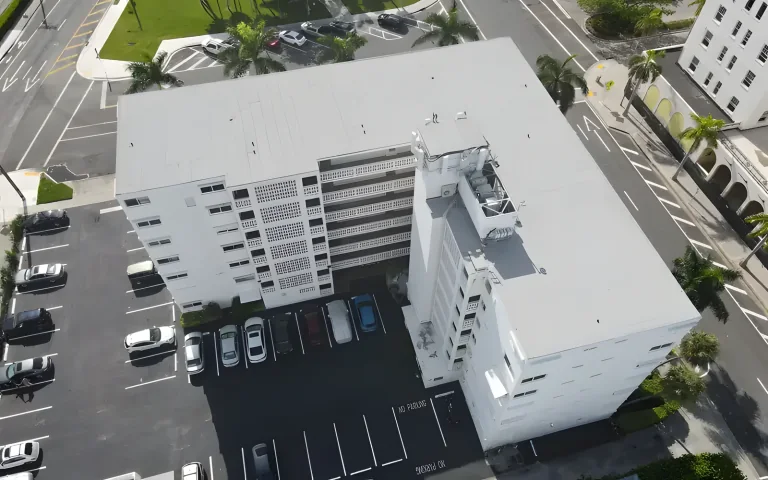
In Palm Beach County the sun is on the roof all year, and much of the heat your air conditioning fights comes down through it. A roof cannot cancel the climate, but the surface, the layers under it and the attic below all change how much of that heat reaches the living space. They also change how long the roof itself lasts, because the layer that suffers most from heat is not the tile or metal you see. It is the underlayment.
Molsbee Roofing has installed tile, metal, shingle and flat roofs in Palm Beach County since 1975. Here is how we explain the choices that affect heat, without promising a number on your power bill.
How does heat get from the roof into the house?
Sunlight hits the roof and some of it is absorbed. The surface heats up, heat moves through the deck into the attic, and the attic passes it down through the ceiling insulation into the rooms. Four things slow that chain:
- A surface that absorbs less sun in the first place (reflectivity)
- A surface that gives off the heat it does absorb (emissivity)
- An air space or reflective layer that keeps heat from crossing into the attic
- An attic that moves hot air out, over enough ceiling insulation
What do reflectivity and emissivity actually mean?
Reflectivity, or solar reflectance, is how much sunlight a surface bounces back instead of absorbing. Emissivity, or emittance, is how readily it releases the heat it has absorbed back to the sky. A roof runs cooler when both are high. Bare, unpainted metal reflects well but holds its heat; a coated metal panel is made to release it. A white membrane scores high on both.
You do not have to take a salesperson's word for these. The Cool Roof Rating Council publishes tested reflectance and emittance values for rated roofing products, and many shingle, tile, metal and membrane lines carry them. Ask to see the rating for the exact color being quoted, not just the product line.
Which roofing materials handle heat well?
- Coated metal. Standing seam or metal shingles with a reflective factory finish, in lighter colors, reflect sunlight and release absorbed heat. Metal gets hot to the touch, so the underlayment beneath it should be a high-temperature self-adhered product rated for metal roofs. See metal roofing.
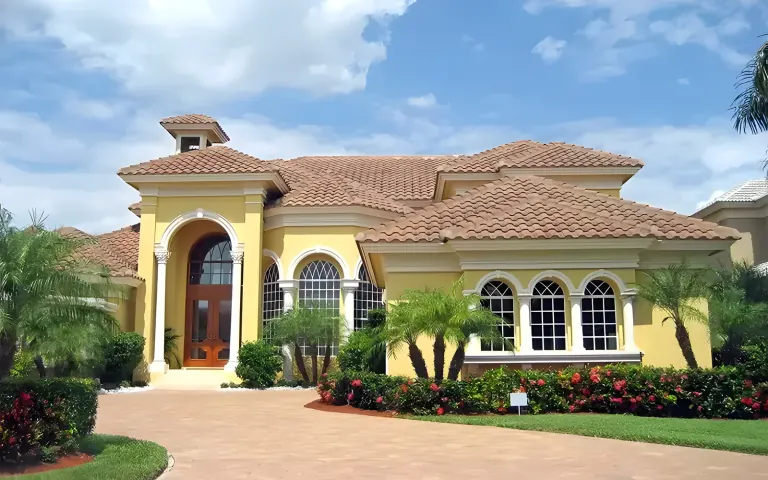
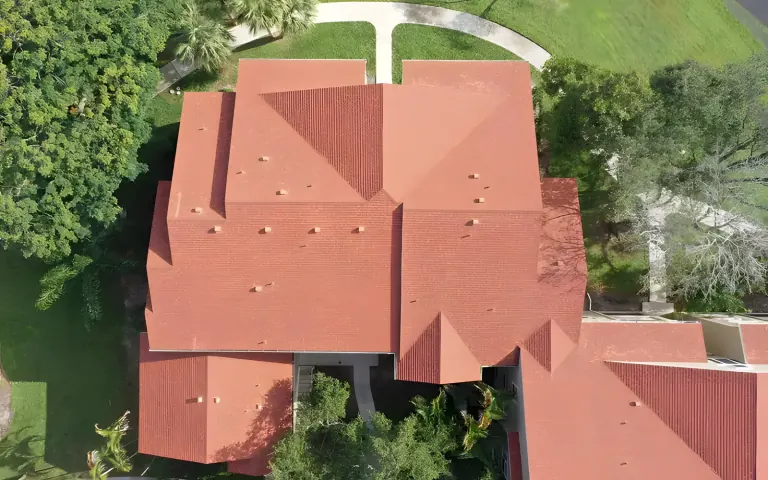
- Clay and concrete tile. Barrel and S-tile sit above the deck with an air space under each piece, and that space lets heat move off before it reaches the underlayment. Lighter tile colors add reflectivity. On a tile re-roof, the underlayment under that air space is the waterproofing layer, so it is chosen for heat as well as water.
- Reflective shingles. Some shingle lines use reflective granules so they absorb less sun than standard shingles, in more colors than white.
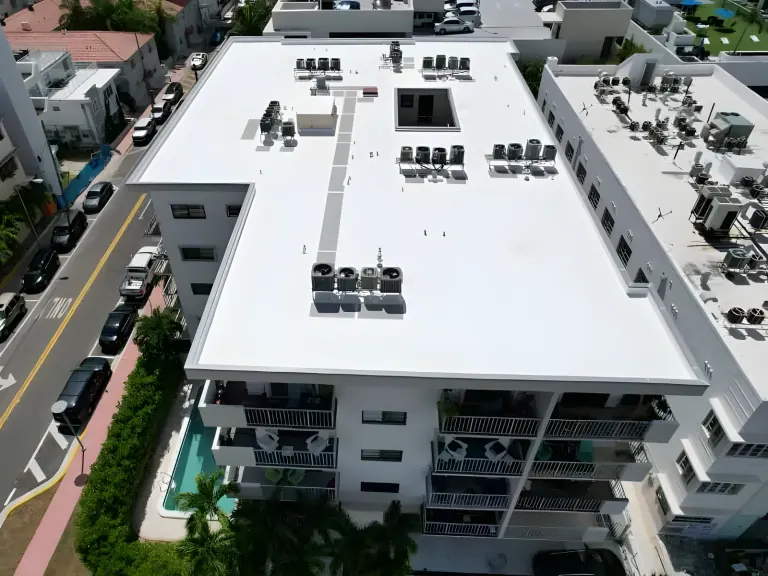
- White membranes on flat sections. TPO and similar white single-ply membranes reflect much of the sun on low-slope porches, additions and commercial roofs.
Why does attic ventilation matter so much?
Even a reflective roof warms the attic, and ventilation is what carries that heat out. The Florida Building Code sets a minimum net free vent area for a vented attic, a ratio of vent area to attic floor area, and that minimum can be reduced when intake and exhaust are balanced between the eaves and the ridge. In plain terms:
- Soffit vents at the eaves let cooler outside air in low.
- Ridge or off-ridge vents near the peak let hot air out high.
- Balance keeps air moving through the whole attic instead of short-circuiting between two exhaust vents.
A common failure is intake that has been blocked: insulation pushed into the eaves, soffits painted shut, or a mix of ridge vent and powered fan that pulls air from the wrong place. Moving air also carries off humidity before it condenses on the underside of the deck.
What does a radiant barrier do?
A radiant barrier is a reflective foil layer on the underside of the deck or across the rafters. It faces an air space and reflects the heat radiating down from the hot deck, so less of it reaches the attic floor. It works alongside ventilation and insulation, not in place of them, and it has to stay clean and face open air to work.
What about spray foam under the deck?
Foam sprayed to the underside of the deck turns the attic into a sealed, unvented space, and the code treats that as a different assembly with its own rules. It changes more than temperature: once foam covers the deck, the deck and its nailing can no longer be seen from the attic, and a leak can travel before it shows. If your home has it, tell us before the inspection so we can plan around it.
Does a color change need approval?
Sometimes. In West Palm Beach's El Cid, Flamingo Park and Old Northwood, a change of roof color or profile needs historic review before the permit, the level of review depends on the change, and the city favors in-kind replacement. Boca Raton's Old Floresta guideline prefers terracotta barrel mission tile. On the island of Palm Beach, a change in appearance goes before the Architectural Commission. Many club communities, such as those in Palm Beach Gardens, have their own tile specifications. The lightest option is not always the one that can be used, so we confirm what is allowed before we price it.
What we check on an inspection
On a free inspection we look at the roof covering, its color and condition, the vents at the eaves and ridge and, where the attic is accessible, blocked intake, the depth and position of the ceiling insulation, the radiant barrier if there is one, and staining or damp decking that points to trapped heat and moisture. What we cannot judge without opening the roof is the condition of the underlayment under tile or shingles that are still in place. If attic heat has aged it, that shows when a section is opened, and we say so plainly rather than guess.
We photograph what we find, attic included, and give you a written scope with the price before any work starts. The scope names the product and color, its published rating where one exists, the underlayment and the secondary water barrier we specify, the ventilation work and the permit, so you know exactly what is going on the house.
A cooler roof, installed and warranted
A cool roof only performs if it is installed the way the manufacturer tested it. Molsbee is a GAF Certified Contractor and an Owens Corning Preferred Contractor, so the materials we install carry the manufacturers' product warranties, and our lifetime workmanship warranty covers the installation. We have worked on Palm Beach County homes since 1975 under Florida certified roofing contractor license CCC1327429, and after a re-roof we provide a roof certification letter for your insurer when asked.
Next step
Call (561) 318-8624 or request a free roof inspection, and we will look at the roof and the attic together.