


January 10, 2025 · 10 min read · Materials
Metal or tile: the questions that decide it
When a Palm Beach County homeowner moves on from shingles, the choice usually narrows to metal or tile. Both can be built to hold up in the county's wind-borne debris region. The decision tends to turn on the house itself: its structure, its street, how close it sits to salt water, and whether a design board or association has a say.
Molsbee Roofing installs both systems and has roofed Palm Beach County homes since 1975. Here is how we walk owners through the choice.
How do they compare at a glance?
| Question | Standing seam metal | Concrete or clay tile |
|---|---|---|
| Weight on the structure | Light | Heavy; framing is checked |
| How it is attached | Concealed clips in the seams | Adhesive or fasteners per tile |
| Where water is stopped | Panels plus underlayment | Underlayment beneath the tile |
| Repairs after a storm | Panel or trim replacement | Individual tile replacement |
| Look | Clean, modern lines | Mediterranean and Spanish tradition |
| Design review | Often a change of appearance | Usually in keeping |
Which holds up better in wind?
Both, when they are installed to the Florida Building Code, 8th Edition. Design wind speeds in the county run from 150 mph inland to 170 mph on the barrier islands, and the fastening schedule tightens with the band. Standing seam hides its attachment inside the seam, so there are no exposed screws to back out. Tile relies on each piece being set and secured, and in a hard storm individual tiles can crack or come loose. On a tile roof, the underlayment beneath is the real waterproofing, so a well-built tile roof keeps water out even when a few tiles are damaged.
What does salt air do to each?
Close to the Atlantic, the Intracoastal or Lake Worth Lagoon, salt reaches the roof edge first. Tile itself does not corrode, but its flashing and edge metal do, so those are specified for salt. On a metal roof the whole surface is metal, so the choice of coated steel or aluminum, the fasteners and keeping incompatible metals apart at every joint matter more. Neither is the wrong choice near the water; each needs to be specified for it.
Does the house carry tile weight?
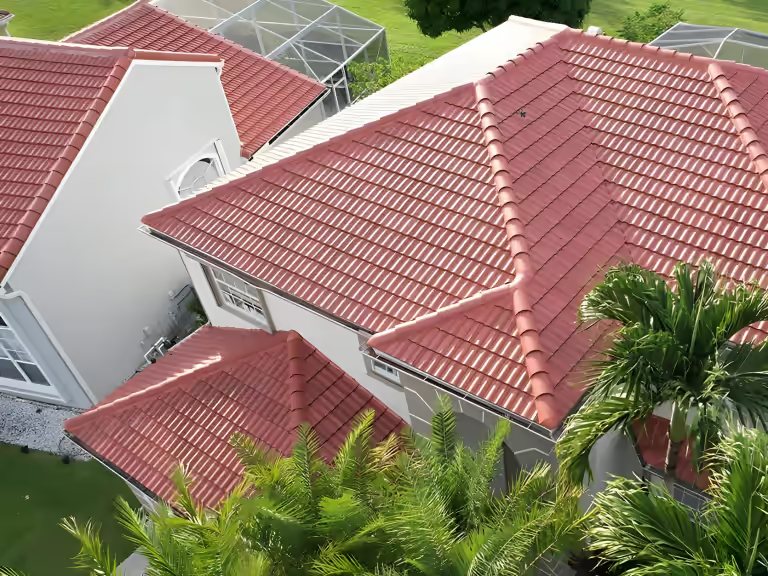
Tile is heavy. Many homes in the county were framed for it, and in tile neighborhoods west of State Road 7 concrete tile over wood trusses is the norm. Homes built with lighter roofs, older framing or additions need a structural check before tile goes on. Metal adds little load, which is why it suits homes that were not designed for tile.
Will a board or association let you switch?
This is often the deciding question. In Lake Worth Beach's historic districts, the replacement has to look like the original, and the Historic Resources Preservation Board has refused standing seam over an original metal-shingle roof on North Ocean Breeze. On the island, the Town of Palm Beach Architectural Commission looks closely at roof tile profile, and Mediterranean Revival tile is the island's signature. Boca Raton's Old Floresta guideline prefers straight barrel mission tile and lists standing seam as not preferred. Many associations also specify the roof material. We check which rules apply before recommending either system.
What does each ask of you later?
A tile roof asks for periodic checks for cracked or slipped tile, clear valleys and, eventually, new underlayment under tile that may still be sound. On clay barrel tile that can mean detach-and-reset: lift the tile, replace the underlayment and reset the same tile. A standing seam roof asks for checks of sealants, trim and penetrations. Exposed-fastener metal adds its screws to that list.
How do we help you choose?
- A free roof inspection of the current roof, the attic and framing we can reach, and the flashing and edges.
- Photos of the findings, so the recommendation is tied to your roof, not a brochure.
- A written scope with the price before any work starts. Where both systems are realistic, we write both, so you compare them on the same terms.
Read more on metal roofing and tile roofing.
Who you are hiring
Molsbee Roofing has worked on Palm Beach County roofs since 1975 and holds Florida license CCC1327429. Whichever system you choose, it carries our lifetime workmanship warranty and the manufacturers' product warranties. We are a GAF Certified Contractor and an Owens Corning Preferred Contractor, and we can provide a roof certification letter for your insurer after the job.
Talk it through with us
Call (561) 318-8624 or request a free roof inspection, and we will show you what your house supports and what each option would cost, in writing.